Sciatica Treatment in NJ & NY
The pain starts in your hip and shoots down to your ankle every time you sit in the car. Standing relieves it for a few minutes but the moment you lower yourself into a chair the lightning bolt fires again. Metro Pain Centers identifies which structure is compressing your sciatic nerve and treats it so you can sit through a meal without shifting every 30 seconds.
Understanding Sciatica at Metro Pain Centers
Sciatica is a clinical syndrome characterized by pain radiating along the distribution of the sciatic nerve, which originates from the L4, L5, S1, S2, and S3 nerve roots, exits the pelvis through the greater sciatic foramen, and extends down the posterior thigh to the lower leg and foot, making it the longest and widest single nerve in the human body.
Piriformis entrapment, the compression of the sciatic nerve as it passes beneath or through the piriformis muscle in the deep buttock, is a non-spinal cause of sciatica that is frequently overlooked when imaging focuses exclusively on the lumbar spine. Metro Pain Centers screens for piriformis entrapment in every sciatica patient through physical examination and diagnostic piriformis injection when clinical suspicion is present.
The sciatic nerve carries both motor and sensory signals to the entire lower leg. When it is compressed, the resulting symptoms range from mild tingling in the calf to complete foot drop depending on the severity and location of the compression.
Metro Pain Centers treats sciatica caused by herniated discs, spinal stenosis, spondylolisthesis, piriformis syndrome, and sacroiliac joint dysfunction. Our physicians determine the specific cause in each patient because the treatment differs for each mechanism.
Understanding Your Condition
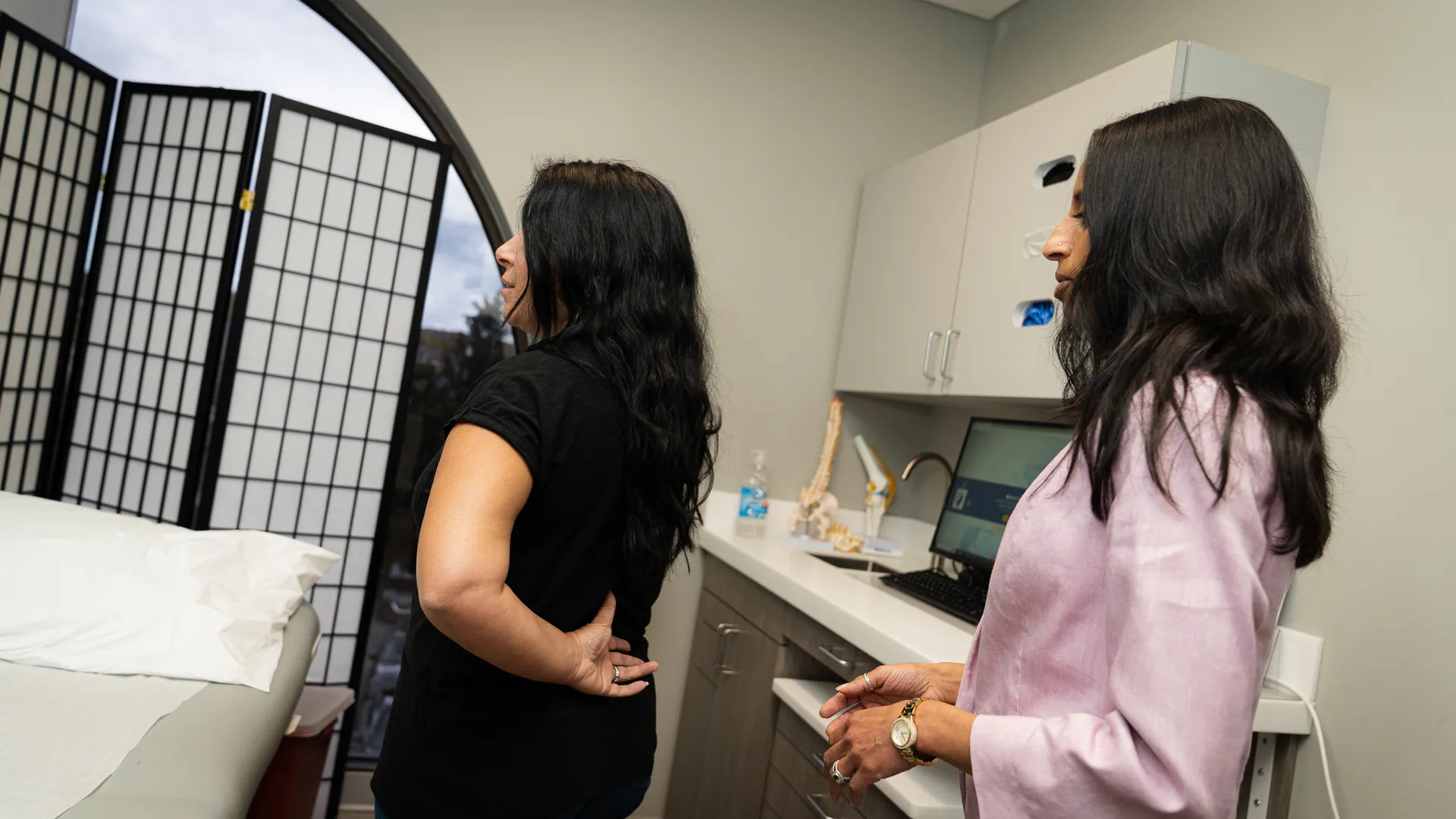
Our board-certified physicians use advanced diagnostic techniques to accurately identify the source of your pain, ensuring you receive the most effective treatment.
Symptoms of Sciatica
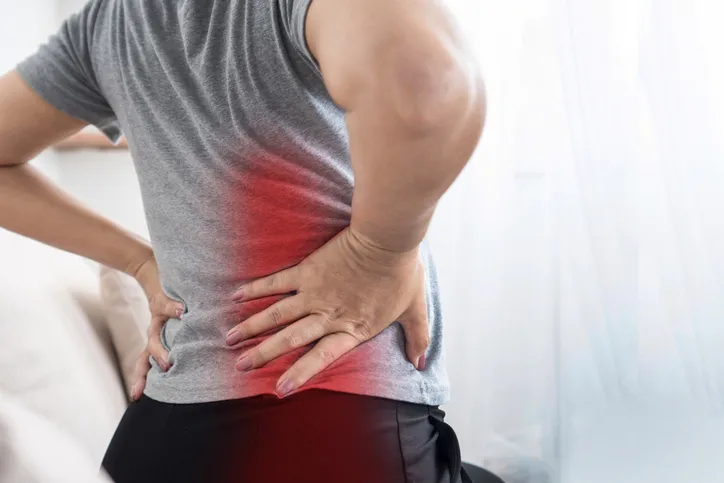
Sharp, shooting pain that travels from the buttock down the back of the thigh and into the calf or foot is the defining symptom. Metro Pain Centers evaluates the pain distribution to determine whether the L5 or S1 nerve root is primarily involved.
Numbness along the outer calf and top of the foot suggests L5 nerve root compression. Numbness along the sole of the foot and behind the calf points to S1 involvement. Our physicians use these sensory maps to localize the compression level.
Weakness in ankle dorsiflexion, making it difficult to lift the foot while walking, indicates L5 motor nerve compromise. Metro Pain Centers considers this a priority finding that may warrant urgent intervention to prevent permanent nerve damage.
Pain that worsens with sitting and improves with walking distinguishes sciatica from vascular claudication. Coughing, sneezing, or straining that intensifies leg pain suggests the compression originates from a disc herniation.
What Causes Sciatica
Lumbar disc herniation at the L4-L5 or L5-S1 level is the most common cause of sciatica that Metro Pain Centers diagnoses. The herniated disc presses directly on the nerve root as it exits the spinal canal, producing radicular pain down the leg.
Lumbar spinal stenosis narrows the spinal canal gradually over years. As the canal shrinks, it compresses the nerve roots that form the sciatic nerve. Metro Pain Centers differentiates stenosis-related sciatica from disc-related sciatica because the treatment approach differs.
Piriformis syndrome occurs when the piriformis muscle in the buttock tightens or spasms and compresses the sciatic nerve where it passes beneath. Our pain management physicians use the FAIR test and diagnostic piriformis injections to confirm this extra-spinal cause.
Spondylolisthesis at the L4-L5 level can compress the L5 nerve root through vertebral slippage. Sacroiliac joint dysfunction refers pain into the buttock and posterior thigh in a pattern that mimics sciatica. Metro Pain Centers distinguishes these causes through targeted diagnostic injections.
How Metro Pain Centers Diagnoses Sciatica
Physical examination includes straight-leg raise testing, crossed straight-leg raise, neurological assessment of the L4 through S1 nerve roots, and piriformis-specific provocation tests. Our board-certified pain specialists use these maneuvers to narrow the diagnosis before ordering imaging.
Lumbar MRI identifies disc herniations, spinal stenosis, and foraminal narrowing that compress the nerve roots forming the sciatic nerve. Metro Pain Centers orders MRI when physical examination findings suggest a structural cause requiring interventional treatment.
Selective nerve root blocks isolate the specific nerve root responsible for the leg pain. When a block at the L5 or S1 level eliminates the sciatica, Metro Pain Centers confirms that root as the target for definitive treatment.
EMG and nerve conduction studies measure the electrical health of the sciatic nerve and its branches. Metro Pain Centers uses these studies to distinguish active nerve compression from chronic nerve damage and to guide treatment intensity.
Treatment Options for Sciatica at Metro Pain Centers
Transforaminal epidural steroid injections target the specific nerve root compressed by a herniated disc or stenosis. Metro Pain Centers performs these under fluoroscopic guidance at the L4-L5 or L5-S1 foramen to deliver maximum anti-inflammatory effect to the inflamed nerve.
Piriformis injections with local anesthetic and corticosteroid release the muscle compression on the sciatic nerve. Patients with piriformis entrapment often experience immediate relief that confirms both the diagnosis and the treatment.
Interventional pain management at Metro Pain Centers includes spinal cord stimulation for chronic sciatica that persists after multiple injection cycles. This neuromodulation approach reduces leg pain perception without opioid dependence.
Physical therapy targets sciatic nerve mobilization, piriformis stretching, and lumbar stabilization to reduce nerve compression from both spinal and muscular sources. PRP therapy supports disc and nerve healing for patients seeking regenerative treatment options.
Schedule an appointment to explore your sciatica treatment plan.
Your Sciatica Specialists at Metro Pain Centers

EXPERIENCE
Led by Dr. Rahul Sood
Led by Dr. Rahul Sood, Chairman of Anesthesiology at New Bridge Medical Centers, Metro Pain Centers delivers multilingual care in English, Spanish, Punjabi, and Hindi across all 12 offices.
Our physicians hold board certifications in anesthesiology and pain medicine, with training from Mount Sinai, Rutgers, and Thomas Jefferson University.
Related Conditions Treated by Metro Pain Centers
Sciatica shares significant overlap with other conditions our physicians treat. Herniated discs at the lumbar level are the single most common cause of sciatica symptoms.
Radiculopathy is the broader term for nerve root compression that includes sciatica. Low back pain often accompanies sciatica when the disc herniation also irritates local spinal structures. Spondylolisthesis causes sciatica through vertebral slippage.
View all conditions we treat at Metro Pain Centers.
Sciatica Treatment at 12 NJ and NY Locations
How long does sciatica last?
Acute sciatica often improves within 4 to 6 weeks with appropriate treatment. Chronic sciatica that persists beyond 12 weeks typically requires interventional management. Metro Pain Centers treats both acute and chronic presentations.
Can sciatica affect both legs at the same time?
Bilateral sciatica is possible but uncommon. When both legs are affected, Metro Pain Centers evaluates for central disc herniation or spinal stenosis compressing multiple nerve roots simultaneously.
What is the fastest way to relieve sciatica pain?
Transforaminal epidural steroid injections provide the most rapid targeted relief for severe sciatica. Metro Pain Centers schedules these within days of diagnosis for patients in significant distress.
Does sciatica always come from the back?
Piriformis syndrome and sacroiliac joint dysfunction cause sciatica symptoms without any spinal pathology. Metro Pain Centers evaluates all potential sources, including non-spinal ones, in every sciatica patient.
Does insurance cover sciatica treatment at Metro Pain Centers?
Metro Pain Centers accepts most major insurance plans. Our billing team verifies your coverage and explains costs before any procedures.
Hear From Our Patients
The doctors actually listen to you and take time to explain everything. I finally found relief after years of back pain.
From my first visit, I felt like they genuinely cared about helping me get better. The staff is wonderful and the treatments changed my life.
After seeing multiple doctors with no improvement, Metro Pain Centers finally gave me a treatment plan that works. I can't recommend them enough.
Get Relief from Sciatica Today
The shooting pain down your leg does not have to control when you sit, how you drive, or whether you sleep through the night. Metro Pain Centers delivers the diagnostic precision to find the compression and the interventional skill to resolve it.