Low Back Pain Treatment in NJ & NY
You drove 40 minutes to work and could not stand up straight when you got out of the car. The ache that started as stiffness six months ago now dictates whether you make it through the day. Metro Pain Centers treats the specific spinal structures behind your low back pain so the commute stops being a countdown to agony.
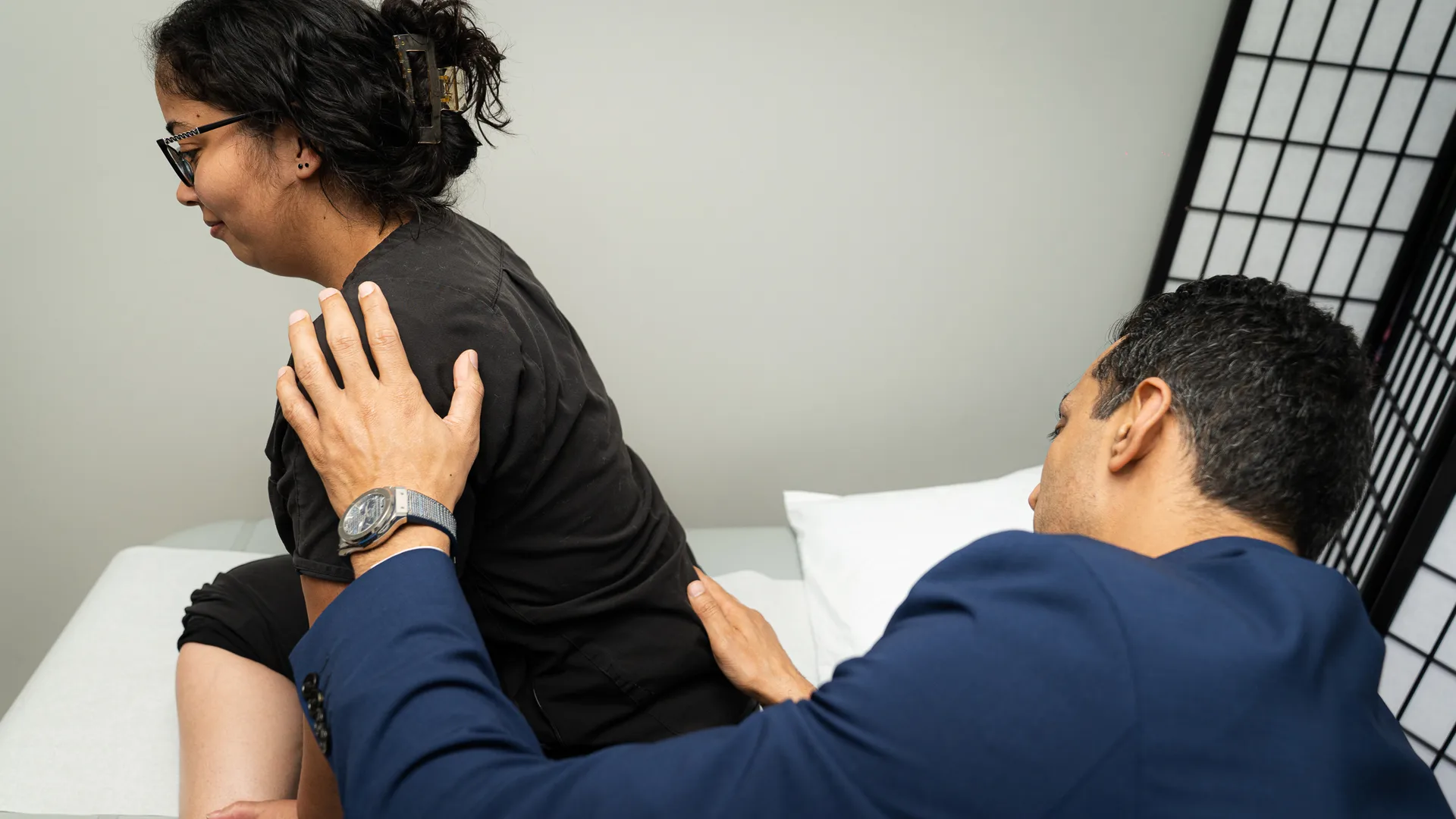
Understanding Low Back Pain at Metro Pain Centers
Low back pain is defined as pain localized between the lower rib margins and the gluteal folds, often accompanied by referred pain into the lower extremities, and it accounts for more years lived with disability than any other musculoskeletal condition according to the World Health Organization.
Lumbar facet arthropathy, the degeneration of the small synovial joints on the posterior aspect of each lumbar vertebra, is one of the most under-recognized sources of chronic low back pain. Metro Pain Centers screens for lumbar facet arthropathy using provocation testing and diagnostic medial branch nerve blocks.
The lumbar spine bears the majority of your body's load. Five vertebrae, five intervertebral discs, and ten facet joints work together to support movement and absorb impact. When any component fails, pain follows.
Nearly 65 million Americans report a recent episode of low back pain. Metro Pain Centers treats each case individually because the structure causing pain in one patient is rarely the same in another.
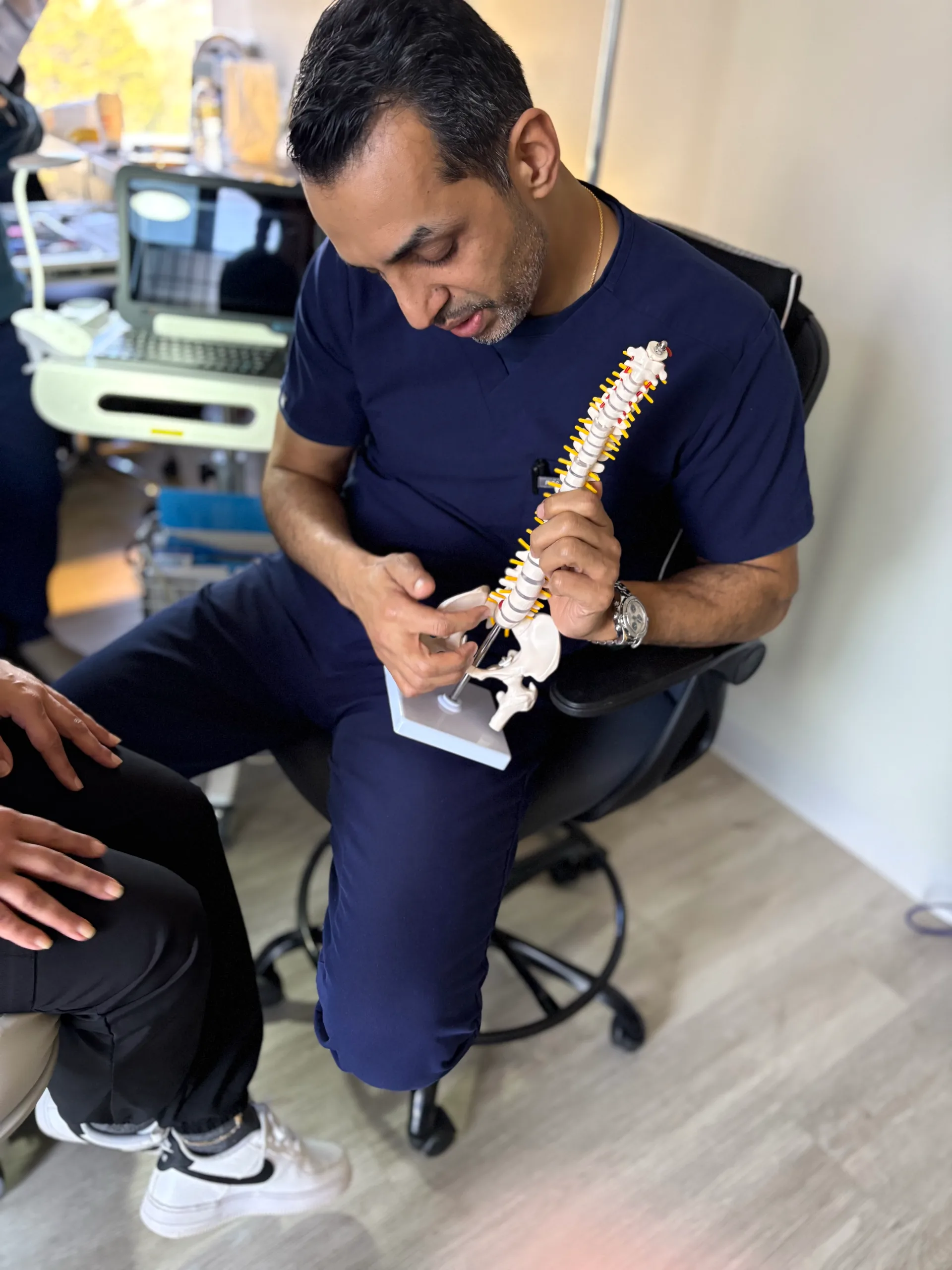
Understanding Your Condition
Our board-certified physicians use advanced diagnostic techniques to accurately identify the source of your pain, ensuring you receive the most effective treatment.
Symptoms of Low Back Pain
A deep, constant ache centered between the hip bones is the hallmark symptom. Metro Pain Centers differentiates this disc-related pattern from the sharper, position-dependent pain produced by facet joint irritation.
Stiffness after prolonged sitting that improves with walking often points to disc dehydration at the L4-L5 or L5-S1 level. Our physicians evaluate whether this pattern responds to flexion or extension to narrow the diagnosis.
Pain that worsens with forward bending suggests disc involvement. Pain that increases with backward bending or rotation points to the facet joints. Metro Pain Centers uses these movement-based clues as the first step toward a targeted diagnosis.
Weakness, numbness, or tingling radiating into one or both legs indicates nerve root compression. Urgent evaluation is warranted if these symptoms include changes in bladder or bowel function.
What Causes Low Back Pain
Disc degeneration is the primary cause Metro Pain Centers identifies in patients over 35. As lumbar discs lose water content, they flatten and transfer more load to surrounding facet joints and ligaments.
Lumbar disc herniation occurs when the gel-like nucleus pushes through the outer annulus and presses against a spinal nerve. The L4-L5 and L5-S1 levels account for over 90 percent of lumbar herniations.
Sacroiliac joint dysfunction generates pain at the base of the spine that patients often mistake for a disc problem. Metro Pain Centers uses provocative physical examination maneuvers and diagnostic SI joint injections to distinguish this source.
Sedentary lifestyle, excess body weight, and repetitive lifting accelerate spinal wear. Our physicians address these modifiable risk factors alongside interventional treatment to reduce recurrence.
How Metro Pain Centers Diagnoses Low Back Pain
A detailed physical exam is the diagnostic starting point. Our board-certified pain specialists assess gait, lumbar range of motion, straight-leg raise, and neurological function to generate a focused differential diagnosis.
Lumbar MRI provides the clearest view of disc herniations, canal stenosis, and facet joint degeneration. Metro Pain Centers orders MRI when clinical findings suggest structural pathology requiring interventional treatment.
Diagnostic injections serve as confirmation tools. Medial branch blocks confirm facet-mediated pain. Selective nerve root blocks isolate the specific nerve level. SI joint injections verify sacroiliac pathology.
X-rays under flexion and extension reveal vertebral instability or spondylolisthesis. Metro Pain Centers orders dynamic films when clinical examination suggests abnormal movement between vertebrae during bending.
Treatment Options for Low Back Pain at Metro Pain Centers
Lumbar epidural steroid injections reduce inflammation around compressed nerve roots. Metro Pain Centers performs these using fluoroscopic guidance to deliver medication precisely to the L4-L5 or L5-S1 foramen where most herniations occur.
Radiofrequency ablation of the medial branch nerves disrupts pain signaling from arthritic facet joints. Patients confirmed through diagnostic blocks experience 6 to 18 months of relief per treatment cycle.
Interventional pain management options at Metro Pain Centers include spinal cord stimulation for chronic low back pain that persists after conservative care. This neuromodulation approach reduces pain perception without opioids.
Physical therapy targets core stabilization, lumbar mobility, and postural correction. PRP therapy and stem cell treatments promote disc and ligament healing for patients seeking regenerative solutions. Medical marijuana may complement pain management for qualifying patients.
Schedule an appointment to explore your low back pain treatment plan.
Your Low Back Pain Specialists at Metro Pain Centers

EXPERIENCE
Led by Dr. Rahul Sood
Led by Dr. Rahul Sood, Chairman of Anesthesiology at New Bridge Medical Centers, Metro Pain Centers provides multilingual care in English, Spanish, Punjabi, and Hindi across all 12 offices.
Our physicians hold board certifications in anesthesiology and pain medicine, with training from Mount Sinai, Rutgers, and Thomas Jefferson University.
Related Conditions Treated by Metro Pain Centers
Low back pain frequently coexists with other spinal conditions. Sciatica develops when lumbar disc herniation or stenosis compresses the sciatic nerve, sending pain down the leg.
Herniated discs at the lumbar level are one of the most common causes of low back pain with radiculopathy. Spondylolisthesis produces low back pain through vertebral slippage that destabilizes the affected segment.
Back and spine pain provides a broader overview of spinal conditions. View all conditions treated by Metro Pain Centers.
Low Back Pain Treatment at 12 NJ and NY Locations
What is the difference between acute and chronic low back pain?
Acute low back pain lasts fewer than six weeks and often resolves with conservative care. Chronic low back pain persists beyond 12 weeks. Metro Pain Centers specializes in both but focuses on preventing acute episodes from becoming chronic.
Can low back pain be treated without surgery?
The majority of low back pain responds to non-surgical care. Metro Pain Centers uses epidural steroid injections, radiofrequency ablation, physical therapy, and regenerative treatments to manage pain without surgical intervention.
How many injection sessions will I need for low back pain?
Treatment frequency depends on your diagnosis and response. Many patients improve after one to three epidural steroid injections. Radiofrequency ablation may be repeated every 12 to 18 months as nerves regenerate.
Should I rest or stay active with low back pain?
Prolonged bed rest worsens most low back pain. Metro Pain Centers recommends modified activity and targeted physical therapy alongside interventional treatment to maintain mobility and prevent deconditioning.
When should I seek emergency care for low back pain?
Seek immediate attention if low back pain is accompanied by loss of bladder or bowel control, progressive leg weakness, or sudden numbness in the groin. These symptoms may indicate cauda equina syndrome.
Hear From Our Patients
The doctors actually listen to you and take time to explain everything. I finally found relief after years of back pain.
From my first visit, I felt like they genuinely cared about helping me get better. The staff is wonderful and the treatments changed my life.
After seeing multiple doctors with no improvement, Metro Pain Centers finally gave me a treatment plan that works. I can't recommend them enough.
Get Relief from Low Back Pain Today
Low back pain does not have to define your mornings, your commute, or your ability to play with your children. Metro Pain Centers delivers the diagnostic accuracy and treatment precision to restore your function.