Knee Arthritis Treatment in NJ & NY
Every bend of your knee produces a grinding that you can feel through your entire thigh. Lowering into a chair sounds like gravel shifting beneath the kneecap, and climbing the porch steps after work has become the part of your evening you dread most. Metro Pain Centers identifies the compartment of cartilage loss in your knee and treats it so you can bend, climb, and sit without the grind dictating your pace.
Understanding Knee Arthritis at Metro Pain Centers
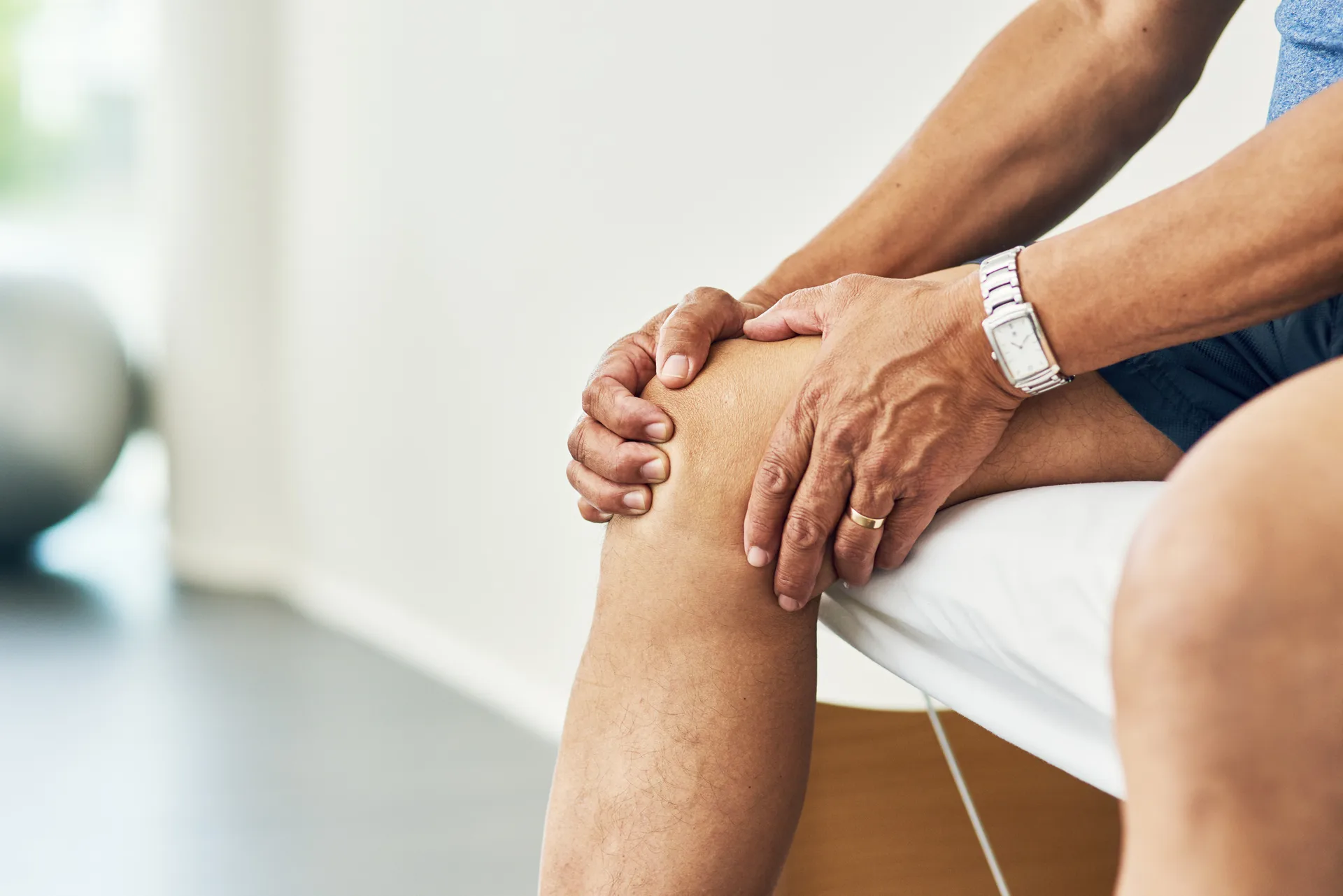
Knee arthritis is the progressive deterioration of the articular cartilage within the knee joint, where the smooth hyaline cartilage covering the femoral condyles, tibial plateau, and patellar undersurface erodes over time, producing pain, swelling, stiffness, and reduced mobility as the protective surface between the bones thins and eventually exposes subchondral bone.
Tricompartmental degeneration, the simultaneous cartilage loss affecting the medial tibiofemoral, lateral tibiofemoral, and patellofemoral compartments of the knee that indicates diffuse rather than focal disease, is a pattern Metro Pain Centers identifies on weight-bearing X-rays to determine whether the arthritis is isolated to one compartment or has spread across the entire joint surface. Compartment mapping guides which treatment approach will be most effective.
The knee is the most commonly affected joint by osteoarthritis. Approximately 45 percent of adults will develop symptomatic knee osteoarthritis during their lifetime, with prevalence doubling after age 65.
Metro Pain Centers treats primary osteoarthritis, post-traumatic arthritis, inflammatory arthritis, and patellofemoral arthritis of the knee. Our physicians stage the disease and match treatment intensity to the degree of cartilage loss because early-stage and advanced knee arthritis require different interventions.
Understanding Your Condition
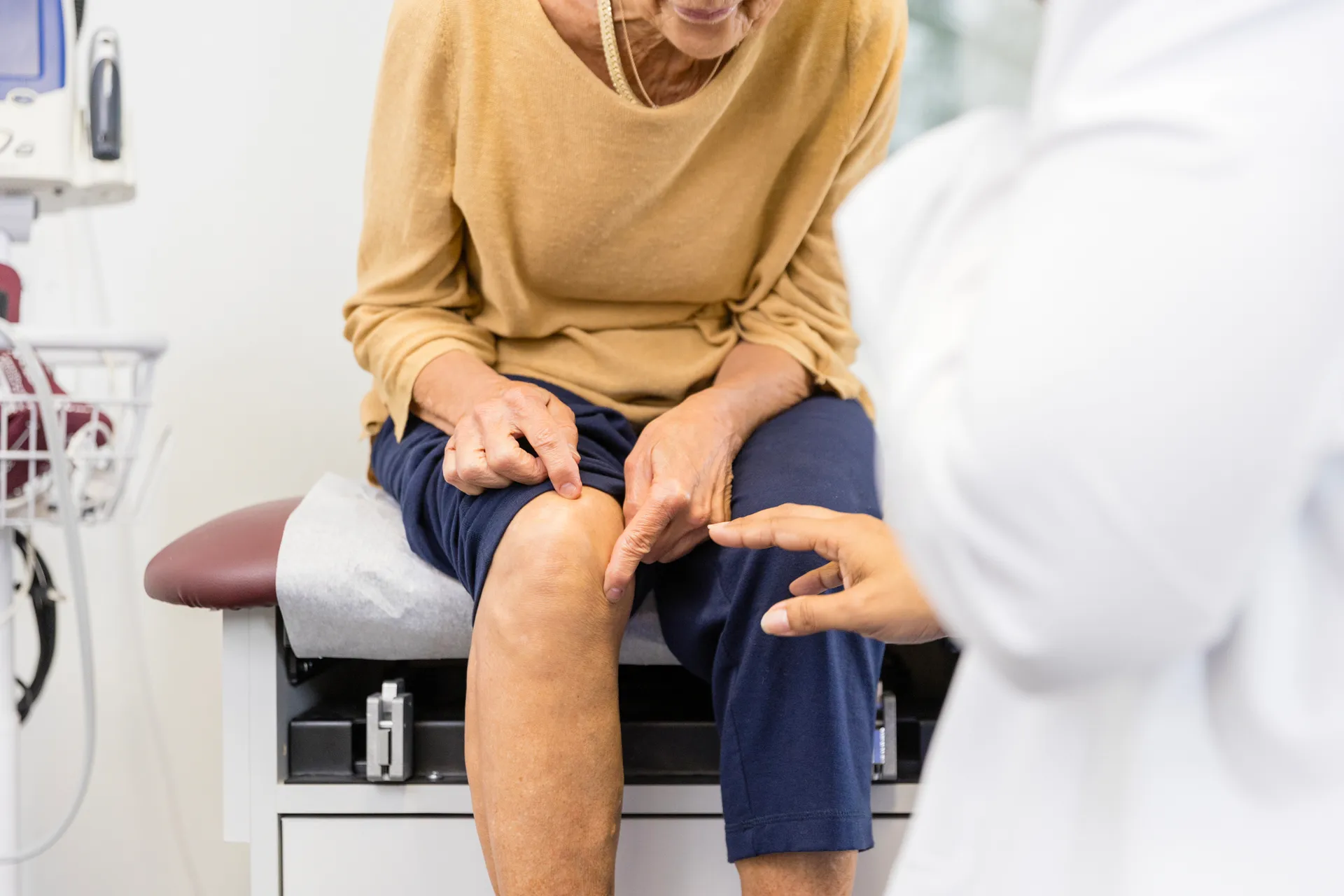
Our board-certified physicians use advanced diagnostic techniques to accurately identify the source of your pain, ensuring you receive the most effective treatment.
Symptoms of Knee Arthritis
Grinding or crepitus with every knee bend is the symptom patients describe most often. The sound and sensation come from roughened cartilage surfaces contacting each other where the smooth lining has worn away. Metro Pain Centers correlates crepitus findings with imaging to determine the extent of cartilage loss.
Swelling that worsens through the day and improves with overnight rest indicates a joint effusion driven by cartilage debris and synovial inflammation. Our pain management physicians assess the swelling cycle to distinguish arthritic effusion from acute injury.
Stiffness that lasts more than thirty minutes after waking or sitting suggests moderate to severe cartilage degeneration. Metro Pain Centers measures morning stiffness duration as a clinical marker for disease progression.
Progressive bowing of the leg into a knock-knee or bow-leg alignment signals asymmetric cartilage loss in one compartment. Our specialists evaluate standing alignment to determine whether medial or lateral compartment disease is driving the deformity.
What Causes Knee Arthritis
Age-related cartilage degeneration is the primary cause of knee osteoarthritis that Metro Pain Centers diagnoses. The articular cartilage loses its water content, collagen integrity, and shock-absorbing capacity over decades of repetitive compressive loading.
Previous knee injury accelerates cartilage breakdown. An ACL tear, meniscal tear, or tibial plateau fracture disrupts the joint mechanics and initiates post-traumatic arthritis. Metro Pain Centers assesses injury history during every knee evaluation because prior trauma predicts earlier and more aggressive degeneration.
Excess body weight multiplies the compressive force across the knee with every step. Each additional pound of body weight produces roughly four pounds of extra force on the knee joint during walking. Our physicians address weight-related joint stress as part of the treatment plan.
Meniscal loss from previous surgery removes the shock absorber between the femoral condyle and tibial plateau. The resulting bone-on-cartilage contact accelerates wear in the affected compartment. Metro Pain Centers evaluates prior surgical history to identify this accelerated pathway.
How Metro Pain Centers Diagnoses Knee Arthritis
Physical examination measures knee range of motion, tests for joint line tenderness, assesses crepitus with flexion and extension, and evaluates standing alignment. Our board-certified pain specialists use these findings to determine the compartments involved and the severity of cartilage loss.
Weight-bearing AP, lateral, and Rosenberg flexion views reveal joint space narrowing, osteophyte formation, subchondral sclerosis, and alignment changes. Metro Pain Centers orders the Rosenberg view specifically to detect posterior cartilage loss that standard AP films miss.
MRI visualizes cartilage thickness, bone marrow edema, meniscal status, and synovial inflammation in detail that X-rays cannot provide. Our physicians order knee MRI when compartment-specific treatment planning requires precise cartilage mapping.
Diagnostic genicular nerve blocks under fluoroscopic guidance confirm the knee joint as the pain generator. When the block eliminates pain temporarily, Metro Pain Centers uses that confirmation to plan genicular nerve radiofrequency ablation for sustained relief.
Treatment Options for Knee Arthritis at Metro Pain Centers
Intra-articular knee injections with corticosteroid reduce inflammation and pain within the arthritic knee joint. Metro Pain Centers performs these under ultrasound or fluoroscopic guidance to ensure the medication enters the joint capsule.
Viscosupplementation with hyaluronic acid restores lubrication and cushioning within the knee joint for patients with moderate arthritis. Our physicians recommend viscosupplementation when patients need longer-lasting relief between corticosteroid cycles.
Interventional pain management at Metro Pain Centers includes genicular nerve radiofrequency ablation for patients whose pain returns after injection therapy, providing six to twelve months of relief by interrupting pain signaling from the joint capsule.
Physical therapy strengthens the quadriceps, hamstrings, and hip abductors to redistribute load away from the most damaged compartment. PRP therapy delivers concentrated growth factors into the knee to support cartilage preservation and reduce synovial inflammation.
Schedule an appointment to discuss your knee arthritis treatment plan.
Your Knee Arthritis Specialists at Metro Pain Centers

EXPERIENCE
Led by Dr. Rahul Sood
Led by Dr. Rahul Sood, Chairman of Anesthesiology at New Bridge Medical Centers, Metro Pain Centers delivers multilingual care in English, Spanish, Punjabi, and Hindi across all 12 offices.
Our physicians hold board certifications in anesthesiology and pain medicine, with training from Mount Sinai, Rutgers, and Thomas Jefferson University.
Related Conditions Treated by Metro Pain Centers
Knee arthritis frequently coexists with other conditions our physicians treat. Knee pain is the symptom that brings most knee arthritis patients through our doors, and confirming arthritis as the specific cause shapes the treatment plan.
Knee bursitis develops alongside knee arthritis when altered gait mechanics irritate the periarticular bursae. Meniscus tear precedes or accompanies knee arthritis in many patients. Arthritis in the hips or opposite knee is common when systemic degeneration affects multiple joints.
View all conditions we treat at Metro Pain Centers.
Knee Arthritis Treatment at 12 NJ and NY Locations
Does knee arthritis always require knee replacement?
Most patients with knee arthritis can be managed with non-surgical treatments for years. Metro Pain Centers provides injections, genicular nerve ablation, physical therapy, and regenerative options that help many patients avoid or significantly delay surgery.
What stage of knee arthritis do I have?
Metro Pain Centers stages knee arthritis using X-ray findings including joint space narrowing, osteophyte size, and subchondral bone changes. Your physician will explain your Kellgren-Lawrence grade and what it means for treatment options.
Can exercise make knee arthritis worse?
Low-impact exercise strengthens the muscles supporting the knee and reduces load on the joint. High-impact activities can accelerate cartilage wear. Metro Pain Centers guides patients toward the right activity level for their disease stage.
Why does my knee grind every time I bend it?
The grinding sensation occurs when roughened cartilage surfaces and exposed bone contact each other during movement. Metro Pain Centers uses imaging to determine which compartments are affected and targets treatment accordingly.
Does insurance cover knee arthritis treatment at Metro Pain Centers?
Metro Pain Centers accepts most major insurance plans. Our billing team verifies your coverage and explains costs before any procedures.
Hear From Our Patients
The doctors actually listen to you and take time to explain everything. I finally found relief after years of back pain.
From my first visit, I felt like they genuinely cared about helping me get better. The staff is wonderful and the treatments changed my life.
After seeing multiple doctors with no improvement, Metro Pain Centers finally gave me a treatment plan that works. I can't recommend them enough.
Get Relief from Knee Arthritis Today
The grinding on every bend and the stiffness that steals your ability to climb, squat, and walk without bracing for pain do not have to be your permanent reality. Metro Pain Centers delivers the diagnostic precision to map the damage and the interventional skill to manage it.