Pinched Nerve Treatment in NJ & NY
You reached overhead to grab a dish from the top shelf and a bolt of electricity shot from your neck down to your fingertips. Now your arm feels heavy, your thumb is numb, and gripping a coffee mug takes concentration that should not be necessary. Metro Pain Centers identifies which cervical nerve root is compressed and treats the compression so the electrical storms in your arm stop firing.
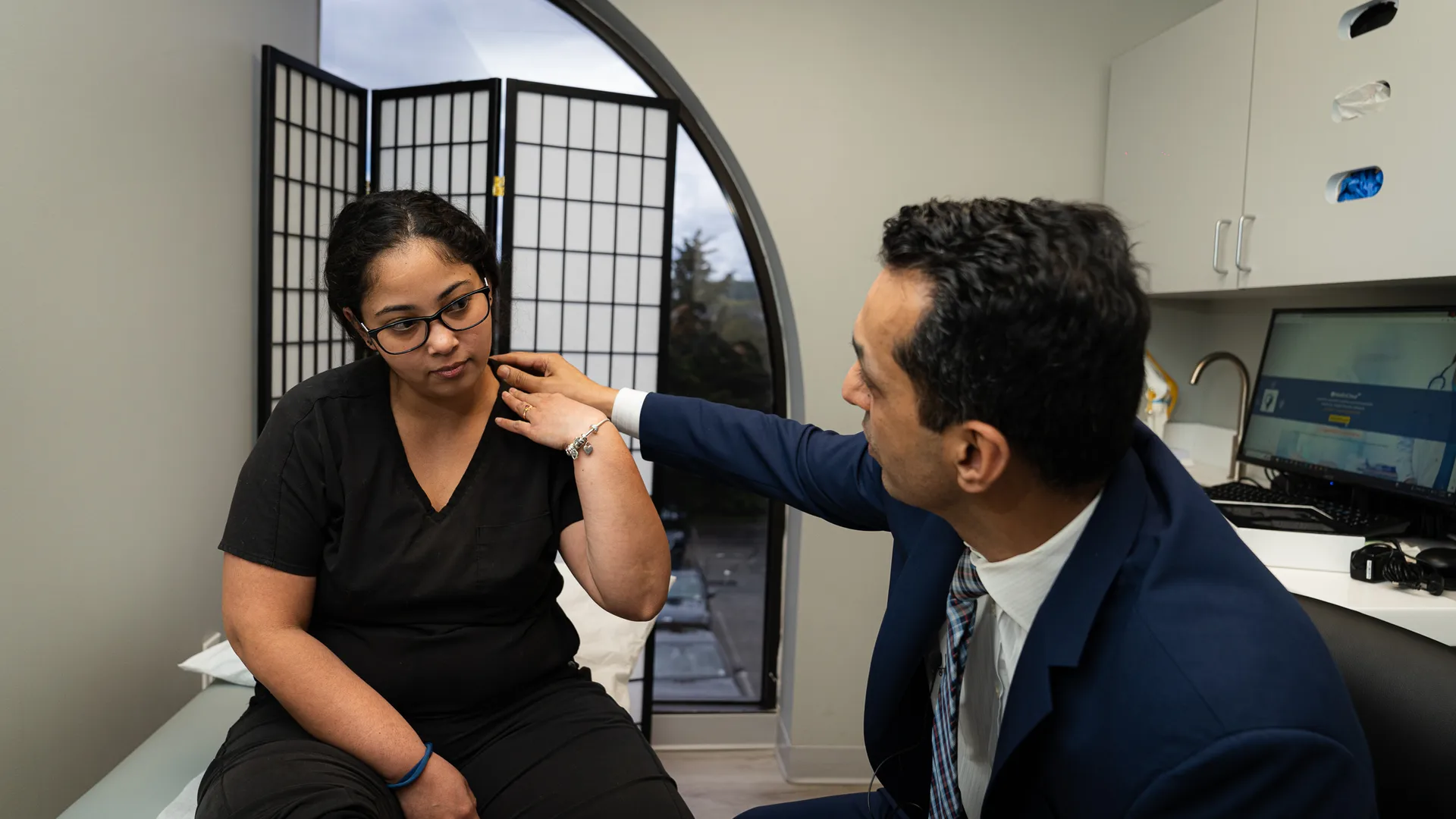
Understanding Pinched Nerves at Metro Pain Centers
A pinched nerve in the neck, clinically termed cervical radiculopathy, occurs when a cervical nerve root is compressed or irritated as it exits the spinal canal through the neural foramen, producing pain, numbness, tingling, or weakness along the specific dermatome and myotome served by that nerve root in the shoulder, arm, or hand.
Foraminal stenosis, the narrowing of the bony neural foramen through which each cervical nerve root exits the spine, is the structural mechanism responsible for most pinched nerves in patients over age 50 and results from a combination of disc height loss, uncovertebral joint hypertrophy, and facet joint enlargement that progressively reduces the space available for the nerve. Metro Pain Centers measures foraminal dimensions on every cervical MRI to determine whether the compression is caused by a soft disc herniation, bony stenosis, or both, because the treatment approach differs for each.
Eight pairs of cervical nerve roots exit the spine from C1 through C8. The C6 and C7 roots are compressed most frequently because the C5-C6 and C6-C7 foramina experience the most degenerative narrowing.
Metro Pain Centers treats pinched nerves caused by cervical disc herniations, foraminal stenosis, osteophyte formation, and facet hypertrophy. Our physicians determine the exact root level and compression mechanism in each patient to select the most effective intervention.

Understanding Your Condition
Our board-certified physicians use advanced diagnostic techniques to accurately identify the source of your pain, ensuring you receive the most effective treatment.
Symptoms of Cervical Radiculopathy from a Pinched Nerve
Pain radiating from the neck into the shoulder and down a specific arm path is the hallmark symptom of a cervical pinched nerve. Metro Pain Centers maps the arm and hand distribution to identify the compressed nerve root level.
Numbness in the thumb and index finger with weakened biceps strength points to C6 nerve root compression at the C5-C6 level. Numbness in the middle finger with triceps weakness indicates C7 involvement at C6-C7. Our physicians use these dermatome and myotome patterns as the first diagnostic clue.
Tingling or burning sensations that intensify when the head is tilted toward the affected side distinguish radicular pain from muscular neck pain. Metro Pain Centers uses this positional provocation finding to confirm nerve root irritation during the physical examination.
Grip weakness, difficulty with fine motor tasks like buttoning a shirt, or a sensation of arm heaviness suggests motor nerve root compromise. Our specialists consider these findings urgent because prolonged motor compression risks permanent weakness.
What Causes a Pinched Nerve in the Neck
Cervical disc herniation at the C5-C6 or C6-C7 level is the most common cause of pinched nerves in patients under 50. The herniated disc material presses directly on the nerve root within the neural foramen. Metro Pain Centers identifies the herniation size and location on MRI to predict treatment response.
Cervical foraminal stenosis from degenerative bone spurs narrows the nerve exit channel gradually over years. Patients with stenosis-related pinched nerves often notice symptoms developing slowly, starting with intermittent tingling that progresses to constant numbness. Our pain management physicians differentiate this gradual pattern from the sudden onset of disc herniation.
Facet joint hypertrophy encroaches on the posterior aspect of the neural foramen. When combined with disc height loss and uncovertebral overgrowth from the anterior side, the foramen narrows from both directions. Metro Pain Centers evaluates all three foraminal boundaries to understand the complete compression picture.
Cervical trauma from motor vehicle accidents or falls can produce acute nerve root compression through disc herniation, fracture fragment displacement, or soft tissue swelling within the foramen. Our specialists prioritize imaging in post-traumatic pinched nerve cases.
How Metro Pain Centers Diagnoses a Pinched Nerve
Physical examination includes Spurling's test, shoulder abduction relief sign, upper extremity reflex testing, and manual muscle strength grading of the C5 through T1 myotomes. Our board-certified pain specialists use these nerve root-specific tests to predict the compression level before imaging.
Cervical MRI is the definitive study for visualizing disc herniations, foraminal stenosis, and the relationship between the compression and the nerve root. Metro Pain Centers orders MRI when clinical examination suggests radiculopathy or when symptoms persist beyond four weeks.
Selective cervical nerve root blocks inject local anesthetic around a single nerve root under fluoroscopic guidance. When the block eliminates the arm pain, Metro Pain Centers confirms that root as the symptomatic level, which is critical when MRI shows abnormalities at multiple levels.
EMG and nerve conduction studies measure the electrical function of the compressed nerve and the muscles it controls. Metro Pain Centers uses electrodiagnostic testing to distinguish active compression from chronic nerve damage and to quantify the severity of motor involvement.
Treatment Options for Pinched Nerves at Metro Pain Centers
Cervical transforaminal epidural steroid injections deliver anti-inflammatory medication directly to the compressed nerve root within the neural foramen. Metro Pain Centers performs these under fluoroscopic guidance with contrast confirmation to maximize medication delivery to the inflamed root.
Selective cervical nerve root blocks provide both diagnostic confirmation and therapeutic relief. Patients with disc herniation-related pinched nerves often experience significant improvement after targeted root blocks that reduce perineural inflammation.
Interventional pain management at Metro Pain Centers includes spinal cord stimulation for chronic cervical radiculopathy that persists after multiple injection cycles, and cervical medial branch ablation when facet hypertrophy contributes to foraminal narrowing.
Physical therapy focuses on cervical traction, nerve gliding exercises, and postural correction to decompress the foramen and reduce neural tension. PRP therapy supports disc and ligament healing for patients with soft tissue compression seeking regenerative treatment.
Schedule an appointment to discuss your pinched nerve treatment options.
Your Pinched Nerve Specialists at Metro Pain Centers

EXPERIENCE
Led by Dr. Rahul Sood
Led by Dr. Rahul Sood, Chairman of Anesthesiology at New Bridge Medical Centers, Metro Pain Centers provides multilingual care in English, Spanish, Punjabi, and Hindi across all 12 offices.
Our physicians hold board certifications in anesthesiology and pain medicine, with training from Mount Sinai, Rutgers, and Thomas Jefferson University.
Related Conditions Treated by Metro Pain Centers
Pinched nerves share significant overlap with other cervical conditions. Cervical herniated discs are the most common cause of acute pinched nerve symptoms in younger patients. Radiculopathy is the clinical term for the nerve root dysfunction that a pinched nerve produces.
Neck pain frequently accompanies pinched nerves when the compression source also irritates local cervical structures. Cervical spinal stenosis narrows both the central canal and the neural foramina, compressing nerve roots from multiple directions.
View all conditions we treat at Metro Pain Centers.
Pinched Nerve Treatment at 12 NJ and NY Locations
How do I know if I have a pinched nerve or just neck pain?
A pinched nerve produces symptoms that travel into the arm or hand, including pain, numbness, tingling, or weakness. Neck pain alone without arm symptoms usually indicates a muscular or facet joint problem. Metro Pain Centers differentiates these through physical examination and diagnostic testing.
Can a pinched nerve in the neck cause hand numbness?
Cervical nerve root compression at C6, C7, or C8 produces specific hand numbness patterns. Metro Pain Centers maps which fingers are affected to identify the exact nerve root involved.
Will a pinched nerve heal on its own?
Some pinched nerves from disc herniations improve as the herniation resorbs over weeks to months. Pinched nerves from bony foraminal stenosis typically do not resolve without treatment. Metro Pain Centers evaluates the compression mechanism to predict whether intervention is needed.
How long does pinched nerve treatment take to work?
Cervical epidural steroid injections and nerve root blocks often provide relief within days to two weeks. Metro Pain Centers schedules follow-up within three weeks of each injection to assess response and plan the next step.
Does insurance cover pinched nerve treatment at Metro Pain Centers?
Metro Pain Centers accepts most major insurance plans. Our billing team verifies your coverage and explains costs before any procedures.
Hear From Our Patients
The doctors actually listen to you and take time to explain everything. I finally found relief after years of back pain.
From my first visit, I felt like they genuinely cared about helping me get better. The staff is wonderful and the treatments changed my life.
After seeing multiple doctors with no improvement, Metro Pain Centers finally gave me a treatment plan that works. I can't recommend them enough.
Get Relief from Your Pinched Nerve Today
The electric pain down your arm and the numbness in your fingers do not have to decide whether you can work, drive, or sleep through the night. Metro Pain Centers delivers the nerve root-level diagnostic precision to locate the compression and the interventional skill to resolve it.