Runner's Knee Treatment in NJ & NY
Around mile three the burning starts behind your kneecap, and by mile four you are shortening your stride to avoid the sharp ache that flares with every downhill step. You have tried rest, new shoes, and foam rolling, but the pain returns within the first quarter mile of your next run. Metro Pain Centers identifies the patellar tracking fault or tissue breakdown causing your runner's knee and treats it so you can pass mile three without the burn forcing you to stop.
Understanding Runner's Knee at Metro Pain Centers
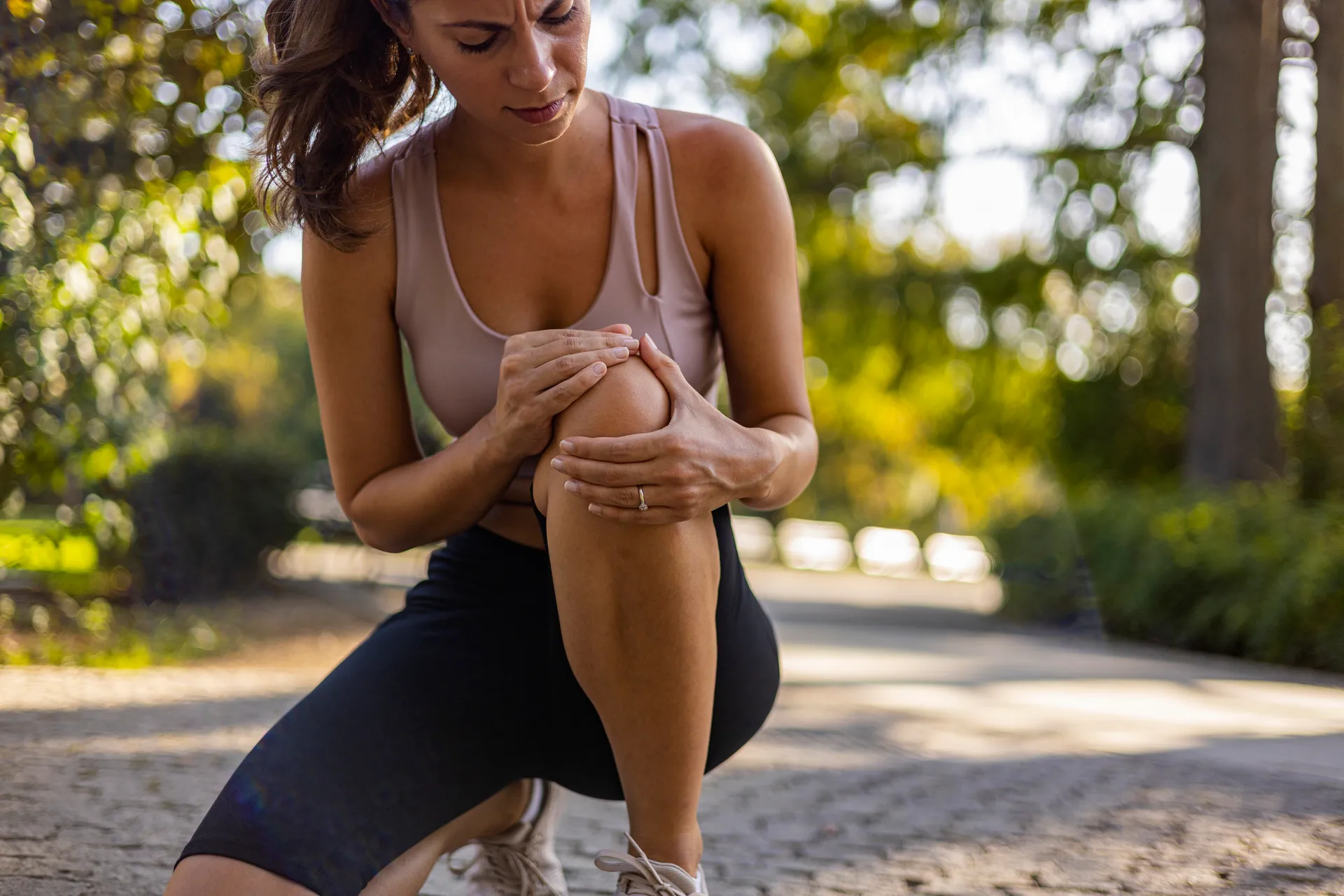
Runner's knee, clinically known as patellofemoral pain syndrome, is a condition where the cartilage on the undersurface of the patella becomes irritated as the kneecap tracks abnormally within the trochlear groove of the femur during repeated knee flexion and extension, producing anterior knee pain that worsens with running, squatting, stair climbing, and prolonged sitting.
Vastus medialis oblique insufficiency, the weakness or delayed activation of the innermost quadriceps muscle fibers that stabilize the patella against lateral displacement during knee extension, is a biomechanical driver of runner's knee that Metro Pain Centers identifies through targeted muscle testing. Restoring VMO activation corrects the lateral patellar drift that irritates the undersurface cartilage.
Patellofemoral pain syndrome accounts for approximately 25 percent of all knee injuries evaluated in sports medicine settings. It is the single most common running-related knee condition, affecting runners of all distances and experience levels.
Metro Pain Centers treats patellofemoral pain syndrome, patellar chondromalacia, iliotibial band syndrome, and patellar tendinopathy. Our physicians distinguish between these anterior knee pain conditions because each requires a different corrective strategy.
Understanding Your Condition
Our board-certified physicians use advanced diagnostic techniques to accurately identify the source of your pain, ensuring you receive the most effective treatment.
Symptoms of Runner's Knee
Anterior knee pain that begins at a predictable point during a run and worsens with continued distance is the hallmark presentation. The pain localizes behind or around the kneecap. Metro Pain Centers evaluates the onset distance and terrain to determine the mechanical threshold triggering the pain.
Pain descending stairs or walking downhill that exceeds the discomfort of climbing points to patellofemoral cartilage irritation. The eccentric quadriceps demand during downhill motion compresses the patella against the trochlear groove. Our pain management physicians distinguish this pattern from meniscal or ligament pain.
A dull ache after sitting with the knee bent for extended periods, called theater sign, indicates patellofemoral compression. The cartilage under the kneecap is loaded by sustained flexion. Metro Pain Centers uses theater sign as a clinical clue that the patellofemoral joint is the pain source.
Grinding or crepitus felt behind the kneecap during knee bends suggests chondromalacia, the softening and fibrillation of the patellar cartilage. Our specialists assess crepitus severity alongside imaging to stage the cartilage damage.
What Causes Runner's Knee
Vastus medialis oblique weakness allows the patella to drift laterally during knee extension, increasing contact pressure on the lateral patellar facet. This imbalance between the VMO and the vastus lateralis produces the tracking fault that drives most cases of runner's knee Metro Pain Centers diagnoses.
Hip abductor weakness causes the femur to rotate inward during running, increasing the Q-angle and pushing the patella laterally against the trochlear groove. Metro Pain Centers evaluates hip strength alongside knee mechanics because proximal weakness often produces distal knee pain.
Sudden increases in running volume or intensity overload the patellofemoral cartilage before it adapts to the new demand. Training errors account for the majority of runner's knee cases in recreational athletes. Our physicians assess training history as part of every runner's knee evaluation.
Foot overpronation transmits rotational forces through the tibia that increase patellar tracking stress. Excessive inward foot roll during the stance phase of running alters the alignment of the entire lower limb kinetic chain. Metro Pain Centers evaluates gait and foot mechanics to identify pronation-related contributors.
How Metro Pain Centers Diagnoses Runner's Knee
Physical examination includes patellar tracking assessment, patellar tilt and glide tests, Clarke's test for patellofemoral crepitus, VMO bulk and activation testing, and hip abductor strength evaluation. Our board-certified pain specialists use these findings to map the biomechanical chain from hip to foot.
Merchant or sunrise view X-rays reveal patellar tilt, subluxation, and patellofemoral joint space narrowing. Metro Pain Centers orders these axial patellar views specifically to visualize the relationship between the kneecap and the trochlear groove.
MRI visualizes cartilage softening, cartilage defects, and patellar malalignment that X-rays cannot detect. Our physicians order MRI when the clinical picture suggests chondromalacia or when the pain has not responded to initial treatment.
Dynamic assessment during single-leg squats and step-downs reveals the real-time patellar tracking abnormalities and hip weakness that drive the condition. Metro Pain Centers uses functional testing to identify the movement faults that static examination may miss.
Treatment Options for Runner's Knee at Metro Pain Centers
Patellar stabilization bracing and taping correct lateral patellar tracking during activity while strengthening programs take effect. Metro Pain Centers prescribes specific taping techniques that offload the irritated lateral patellar facet.
Intra-articular knee injections with corticosteroid reduce the synovial inflammation that amplifies patellofemoral pain. Our physicians use ultrasound-guided injections to deliver medication into the joint when inflammation is preventing participation in rehabilitation.
Interventional pain management at Metro Pain Centers includes targeted injection therapy for refractory runner's knee that has not responded to physical therapy and bracing alone.
Physical therapy is the primary treatment for runner's knee, focusing on VMO strengthening, hip abductor activation, IT band flexibility, and running gait retraining. PRP therapy supports cartilage preservation in patients with chondromalacia who want to continue running without accelerating cartilage damage.
Schedule an appointment to discuss your runner's knee treatment plan.
Your Runner's Knee Specialists at Metro Pain Centers

EXPERIENCE
Led by Dr. Rahul Sood
Led by Dr. Rahul Sood, Chairman of Anesthesiology at New Bridge Medical Centers, Metro Pain Centers delivers multilingual care in English, Spanish, Punjabi, and Hindi across all 12 offices.
Our physicians hold board certifications in anesthesiology and pain medicine, with training from Mount Sinai, Rutgers, and Thomas Jefferson University.
Related Conditions Treated by Metro Pain Centers
Runner's knee frequently coexists with other conditions our physicians treat. Knee pain is the broad symptom category, and confirming patellofemoral syndrome as the specific cause directs treatment to the correct biomechanical fault.
Knee bursitis produces anterior swelling that can accompany patellofemoral irritation. Knee arthritis develops in the patellofemoral compartment when runner's knee progresses to cartilage loss. Sports injuries often involve runner's knee as one component of a multi-structure problem.
View all conditions we treat at Metro Pain Centers.
Runner's Knee Treatment at 12 NJ and NY Locations
Can I keep running with runner's knee?
Continuing to run through significant patellofemoral pain risks accelerating cartilage damage. Metro Pain Centers develops a return-to-run protocol that reduces symptoms while maintaining fitness during recovery.
Why does runner's knee hurt more going downhill?
Downhill running increases the eccentric load on the quadriceps and compresses the patella against the trochlear groove with greater force. Metro Pain Centers addresses the muscle imbalances that make downhill running painful.
Will runner's knee go away on its own?
Runner's knee caused by biomechanical imbalances persists until those imbalances are corrected. Rest reduces symptoms temporarily, but the pain returns when running resumes. Metro Pain Centers treats the underlying cause to produce lasting relief.
Do I need a knee brace for runner's knee?
Patellar stabilization braces and taping can reduce symptoms during activity by correcting patellar tracking. Metro Pain Centers prescribes bracing as part of a comprehensive treatment plan that includes strengthening and gait correction.
Does insurance cover runner's knee treatment at Metro Pain Centers?
Metro Pain Centers accepts most major insurance plans. Our billing team verifies your coverage and explains costs before any procedures.
Hear From Our Patients
The doctors actually listen to you and take time to explain everything. I finally found relief after years of back pain.
From my first visit, I felt like they genuinely cared about helping me get better. The staff is wonderful and the treatments changed my life.
After seeing multiple doctors with no improvement, Metro Pain Centers finally gave me a treatment plan that works. I can't recommend them enough.
Get Relief from Runner's Knee Today
The mile-three burn and the downhill ache that cuts your runs short do not have to end your training. Metro Pain Centers delivers the biomechanical precision to find the tracking fault and the treatment skill to correct it.