Herniated Disc Treatment in NJ & NY
Your MRI reads "L4-L5 herniation" and suddenly a disc you never thought about controls your entire day. Sitting hurts. Standing helps for a while but the leg pain returns the moment you lean forward. Metro Pain Centers treats herniated discs with targeted, non-surgical interventions that address the compression causing your symptoms.
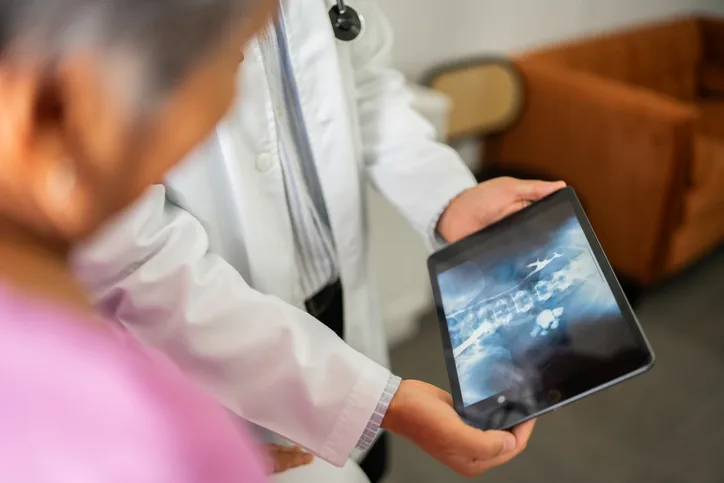
Understanding Herniated Discs at Metro Pain Centers
A herniated disc occurs when the soft, gel-like nucleus pulposus of an intervertebral disc pushes through a tear in the tougher outer annulus fibrosus, potentially compressing adjacent spinal nerve roots or the spinal cord itself and producing pain, numbness, or weakness along the affected nerve distribution.
An annular fissure, a tear in the outer fibrous ring of the disc that allows the inner nucleus to protrude, is often the initiating event in disc herniation. Metro Pain Centers identifies annular fissures on MRI and treats the resulting herniation before further nerve damage occurs.
Each spinal disc acts as a shock absorber between two vertebrae. The L4-L5 and L5-S1 discs bear the greatest mechanical load, which is why these two levels account for the vast majority of lumbar herniations.
Metro Pain Centers sees herniated discs at every spinal level. Cervical herniations affect the neck and arms while thoracic herniations produce mid back and trunk symptoms. Our physicians determine the precise level and direction of herniation to guide treatment selection.
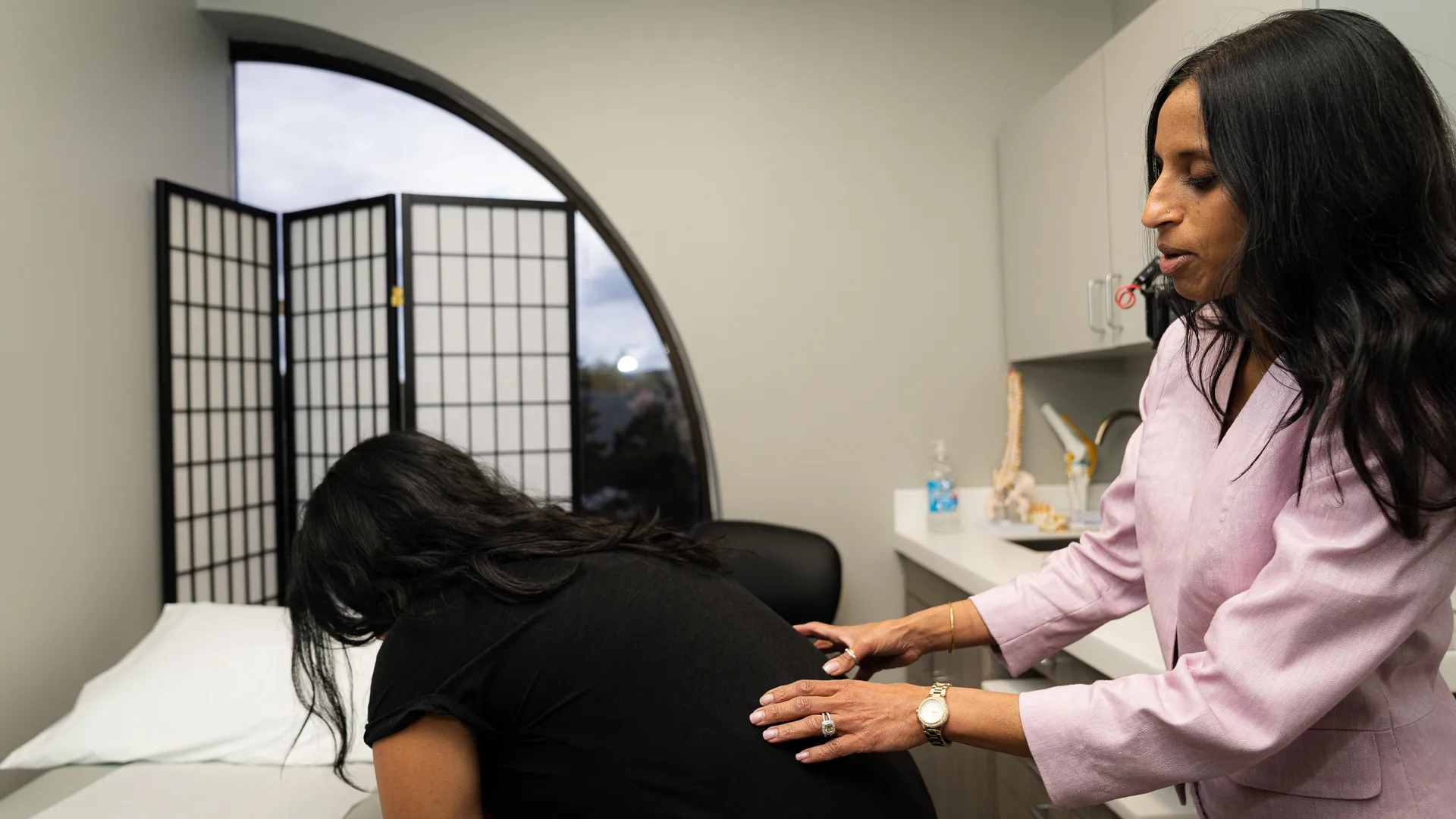
Understanding Your Condition
Our board-certified physicians use advanced diagnostic techniques to accurately identify the source of your pain, ensuring you receive the most effective treatment.
Symptoms of a Herniated Disc
Sharp, shooting pain from the lower back into the buttock and down the leg is the classic presentation of a lumbar disc herniation compressing the L5 or S1 nerve root. Metro Pain Centers maps the pain distribution to identify the affected nerve level.
Numbness or tingling in the foot, calf, or thigh follows a specific dermatomal pattern depending on which nerve root the herniated disc is compressing. Our physicians test sensation along the L4, L5, and S1 dermatomes to localize the lesion.
Weakness in the ankle, big toe, or quadriceps muscle suggests motor nerve involvement. Metro Pain Centers considers this a priority finding that may accelerate the diagnostic and treatment timeline.
Pain that worsens with sitting, coughing, or bearing down and improves with standing or walking is a hallmark of disc-related compression. Our specialists use this positional pattern to distinguish herniated disc pain from facet or muscular sources.
What Causes Herniated Discs
Age-related disc degeneration weakens the annulus fibrosus over time. As the outer ring dries and develops micro-tears, the nucleus pulposus finds pathways to escape. Metro Pain Centers diagnoses this degenerative pattern most frequently in patients between ages 30 and 50.
Acute trauma from heavy lifting, sudden twisting, or motor vehicle accidents can rupture a disc without prior degeneration. The force overwhelms the annular fibers in a single event, producing immediate herniation and nerve compression.
Repetitive flexion and rotation movements in occupations involving bending, driving, or manual labor accelerate disc wear. Our pain management physicians evaluate occupational history as part of every herniated disc assessment.
Genetic factors influence disc structure and hydration. Patients with a family history of disc disease face elevated risk. Metro Pain Centers considers hereditary predisposition when designing long-term management strategies.
How Metro Pain Centers Diagnoses Herniated Discs
Physical examination includes straight-leg raise testing, neurological assessment of strength and reflexes, and dermatomal sensory mapping. Our board-certified pain specialists correlate physical findings with reported symptoms before ordering imaging.
Lumbar or cervical MRI is the gold standard for visualizing disc herniations. Metro Pain Centers uses MRI to confirm the location, size, and direction of the herniation and to evaluate whether the disc is compressing a nerve root or the spinal cord.
Selective nerve root blocks inject local anesthetic around a single nerve root under fluoroscopic guidance. When the injection eliminates the patient's pain pattern, Metro Pain Centers confirms that nerve as the symptomatic level.
Electromyography and nerve conduction studies detect electrical changes in muscles supplied by the compressed nerve. Metro Pain Centers orders EMG/NCS when clinical findings are ambiguous or when multiple disc levels appear abnormal on MRI.
Treatment Options for Herniated Discs at Metro Pain Centers
Transforaminal epidural steroid injections deliver anti-inflammatory medication directly to the nerve root compressed by the herniated disc. Metro Pain Centers performs these under fluoroscopic guidance at the specific foramen where the herniation is causing nerve irritation.
Spinal cord stimulation provides an option for patients with chronic radicular pain from disc herniation that has not responded to injections or physical therapy. This implantable device modulates pain signals along the spinal cord.
Interventional pain management at Metro Pain Centers includes percutaneous disc decompression for contained herniations and selective nerve root blocks for diagnostic precision.
Physical therapy uses McKenzie-method directional preference exercises, core stabilization, and nerve gliding techniques to reduce disc pressure on the nerve root. PRP therapy targets annular tears to support natural disc healing. Stem cell therapy offers regenerative potential for disc degeneration.
Schedule an appointment to discuss your herniated disc treatment plan.
Your Herniated Disc Specialists at Metro Pain Centers

EXPERIENCE
Led by Dr. Rahul Sood
Led by Dr. Rahul Sood, Chairman of Anesthesiology at New Bridge Medical Centers, Metro Pain Centers delivers multilingual care in English, Spanish, Punjabi, and Hindi at every office.
Our physicians hold board certifications in anesthesiology and pain medicine, with training from Mount Sinai, Rutgers, and Thomas Jefferson University.
Related Conditions Treated by Metro Pain Centers
Herniated discs frequently produce symptoms that overlap with other spinal conditions. Sciatica is the most common consequence of lumbar disc herniation, causing pain that radiates along the sciatic nerve path.
Radiculopathy describes the nerve root dysfunction that results from disc compression at any spinal level. Cervical herniated discs affect the neck region with symptoms radiating into the arms and hands.
Low back pain often accompanies lumbar disc herniations. View all conditions treated by Metro Pain Centers.
Herniated Disc Treatment at 12 NJ and NY Locations
Can a herniated disc heal on its own?
Some herniated discs resorb partially over 6 to 12 months. However, persistent nerve compression during that time can cause lasting damage. Metro Pain Centers manages symptoms actively while monitoring disc healing progress.
What is the difference between a bulging disc and a herniated disc?
A bulging disc extends beyond its normal boundary without a tear in the outer annulus. A herniated disc involves a rupture through the annulus that allows the inner nucleus to escape. Metro Pain Centers treats both conditions based on symptom severity.
Will I need surgery for my herniated disc?
Most herniated discs respond to non-surgical treatment. Metro Pain Centers reports that the majority of patients achieve significant relief through epidural injections, physical therapy, and regenerative medicine without requiring surgery.
How long does recovery take after an epidural steroid injection for a herniated disc?
The injection itself takes 15 to 20 minutes. Most patients resume normal activities within 24 to 48 hours. Full therapeutic benefit develops over 3 to 7 days as the steroid reduces inflammation around the compressed nerve.
Does insurance cover herniated disc treatment at Metro Pain Centers?
Metro Pain Centers accepts most major insurance plans. Our billing team verifies coverage and discusses costs before any procedure is performed.
Hear From Our Patients
The doctors actually listen to you and take time to explain everything. I finally found relief after years of back pain.
From my first visit, I felt like they genuinely cared about helping me get better. The staff is wonderful and the treatments changed my life.
After seeing multiple doctors with no improvement, Metro Pain Centers finally gave me a treatment plan that works. I can't recommend them enough.
Get Relief from Herniated Disc Pain Today
A herniated disc diagnosis does not mean surgery is inevitable. Metro Pain Centers provides the interventional precision and non-surgical expertise to reduce your pain and protect the nerve that disc is compressing.