Sports Injuries Treatment in NJ & NY
The weekend soccer game ended with a pop in your ankle and now you cannot put weight on it without the joint giving way. You iced it, wrapped it, stayed off it for a week, and the swelling went down but the instability stayed. Metro Pain Centers diagnoses the specific structure that failed and treats it so you can return to the field instead of watching from the sideline.
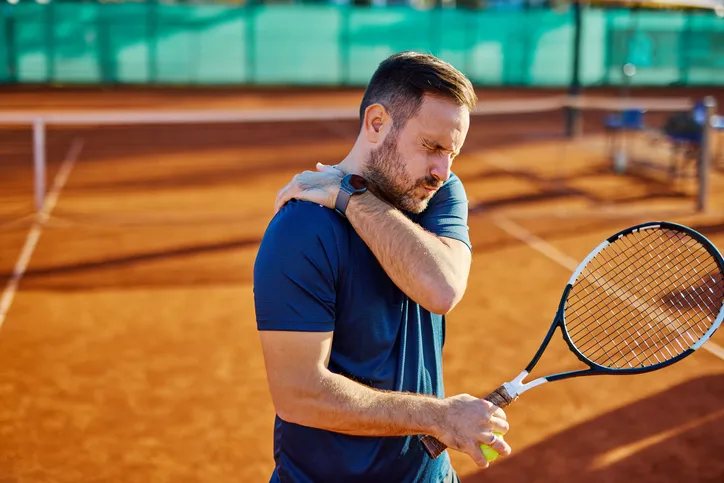
Understanding Sports Injuries at Metro Pain Centers
Sports injuries encompass acute traumatic damage and chronic overuse conditions affecting muscles, tendons, ligaments, cartilage, and bone sustained during athletic or recreational activity, with an estimated 8.6 million sports- and recreation-related injuries occurring annually in the United States according to data from the National Electronic Injury Surveillance System.
Ligamentous laxity grading, the clinical classification of joint instability from Grade I partial tear with microscopic fiber disruption through Grade II partial tear with measurable looseness to Grade III complete rupture with gross instability, determines whether a sports injury requires conservative management or surgical referral. Metro Pain Centers grades every ligament injury on initial examination to guide the treatment pathway.
The body's response to acute sports trauma follows a predictable cascade. Tissue disruption triggers an inflammatory phase lasting 48 to 72 hours. Proliferative repair begins during the first week. Remodeling of the new tissue continues for months. Treatment that supports each phase produces stronger healing.
Metro Pain Centers treats sports injuries across all joints and body regions. Our physicians determine whether the injury involves bone, cartilage, ligament, tendon, or muscle and select the intervention that matches the tissue type and severity grade.
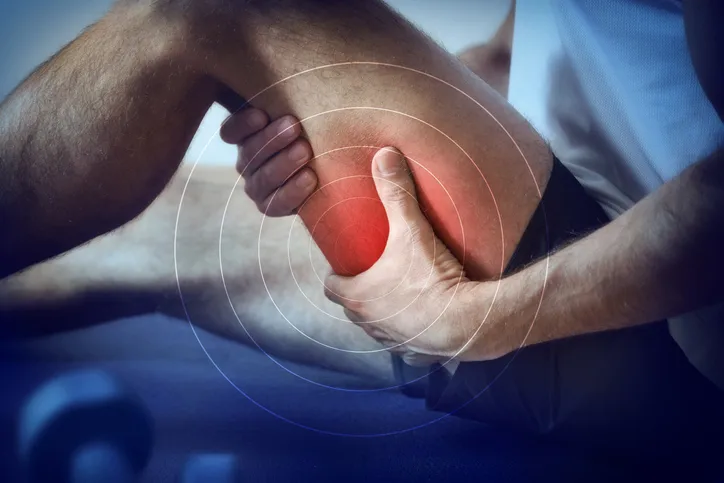
Understanding Your Condition
Our board-certified physicians use advanced diagnostic techniques to accurately identify the source of your pain, ensuring you receive the most effective treatment.
Symptoms of Sports Injuries
Acute pain at the moment of injury followed by rapid swelling indicates tissue disruption. Metro Pain Centers evaluates the mechanism of injury, whether contact, pivoting, landing, or overextension, to narrow the differential diagnosis before imaging.
Joint instability or a feeling of the joint giving way suggests ligament damage. A popping sensation at the time of injury followed by immediate swelling often indicates a ligament tear. Our physicians perform stress testing to grade the laxity and identify which ligament is compromised.
Persistent pain with specific movements but not with rest distinguishes tendon injury from bone or ligament pathology. Tendinopathy produces pain during loading of the tendon such as jumping, pushing off, or gripping. Metro Pain Centers isolates the affected tendon through resisted movement testing.
Locking, catching, or clicking within a joint suggests cartilage or meniscal injury. The mechanical symptoms occur when a loose fragment or torn cartilage flap interferes with normal joint motion. Our physicians differentiate mechanical from inflammatory causes through examination and MRI correlation.
What Causes Sports Injuries
Acute trauma from a single high-force event such as a tackle, fall, or sudden change of direction causes immediate structural failure. Ligaments tear when joint forces exceed their tensile strength. Metro Pain Centers sees these injuries most frequently in soccer, basketball, football, and skiing.
Overuse injuries develop from repetitive microtrauma that exceeds the tissue's capacity to repair between loading cycles. Stress fractures, tendinopathy, and bursitis result when training volume or intensity increases faster than the tissue can adapt. Our pain management physicians evaluate training history as part of every overuse injury assessment.
Biomechanical abnormalities including leg length discrepancy, excessive foot pronation, and hip weakness alter force distribution across joints during athletic activity. Metro Pain Centers identifies these predisposing factors to reduce reinjury risk after the acute problem resolves.
Inadequate conditioning and return-to-play without full rehabilitation account for a significant proportion of recurrent sports injuries. Muscles that have not regained full strength or proprioception after a prior injury leave the joint vulnerable to reinjury at the same site.
How Metro Pain Centers Diagnoses Sports Injuries
Physical examination includes joint-specific provocation tests. Our board-certified pain specialists perform the anterior drawer, Lachman, and pivot shift tests for knee ligament injuries; the Thompson test for Achilles tendon rupture; and the Ottawa ankle rules for fracture screening at the initial visit.
MRI identifies soft tissue injuries including ligament tears, meniscal damage, tendon pathology, and cartilage defects that physical examination suspects but cannot confirm. Metro Pain Centers orders MRI for injuries that do not improve with initial management or that show signs of structural disruption.
Musculoskeletal ultrasound provides dynamic, real-time imaging of tendons, ligaments, and muscles during movement. Metro Pain Centers uses ultrasound to evaluate tendon integrity, detect partial tears, and guide diagnostic injections into specific joint compartments.
Diagnostic joint injections with local anesthetic confirm whether a specific structure is generating the pain. When an injection into the subacromial bursa eliminates shoulder pain during overhead motion, Metro Pain Centers confirms the bursa as the primary pain generator.
Treatment Options for Sports Injuries at Metro Pain Centers
PRP injections concentrate the patient's own platelets and growth factors and deliver them directly to the injured tissue. Metro Pain Centers uses ultrasound-guided PRP injection for partial ligament tears, chronic tendinopathy, and muscle injuries to accelerate the natural healing response.
Corticosteroid injections reduce acute inflammation in bursae, joint capsules, and tendon sheaths. Metro Pain Centers performs these under ultrasound guidance to ensure medication reaches the inflamed structure precisely, providing rapid pain relief that enables earlier rehabilitation.
Interventional pain management at Metro Pain Centers includes viscosupplementation for cartilage wear in athletic joints, peripheral nerve blocks for post-injury neuropathic pain, and stem cell therapy for ligament and tendon regeneration in appropriate candidates.
Physical therapy at Metro Pain Centers designs sport-specific rehabilitation protocols that restore strength, flexibility, and proprioception. PRP therapy and physical therapy together create a treatment pathway from injury through return to full athletic activity.
Schedule an appointment to discuss your sports injury treatment plan.
Your Sports Injury Specialists at Metro Pain Centers

EXPERIENCE
Led by Dr. Rahul Sood
Led by Dr. Rahul Sood, Chairman of Anesthesiology at New Bridge Medical Centers, Metro Pain Centers delivers multilingual care in English, Spanish, Punjabi, and Hindi across all 12 offices.
Our physicians hold board certifications in anesthesiology and pain medicine, with training from Mount Sinai, Rutgers, and Thomas Jefferson University.
Related Conditions Treated by Metro Pain Centers
Sports injuries frequently involve the same structures our physicians treat in non-athletic patients. Rotator cuff injury from overhead sports responds to the same PRP and physical therapy protocols used for degenerative tears.
Meniscus tear and runner's knee are among the most common sport-specific diagnoses our physicians manage. Shoulder impingement develops in swimmers, tennis players, and overhead athletes from repetitive subacromial loading.
View all conditions we treat at Metro Pain Centers.
Sports Injury Treatment at 12 NJ and NY Locations
How soon after a sports injury should I see a pain specialist?
Early evaluation within the first week produces better outcomes. Metro Pain Centers recommends assessment before scar tissue formation and compensatory movement patterns develop, because these secondary changes complicate treatment.
Can I avoid surgery for a torn ligament?
Many Grade I and Grade II ligament tears heal with guided rehabilitation and regenerative injections. Metro Pain Centers uses PRP therapy and structured physical therapy to support non-surgical ligament healing in appropriate candidates.
How does PRP therapy help sports injuries?
PRP concentrates your own blood platelets, which release growth factors including platelet-derived growth factor and transforming growth factor beta directly at the injury site. Metro Pain Centers injects PRP under ultrasound guidance to accelerate tissue repair.
When can I return to my sport after an injury?
Return-to-play depends on the specific tissue injured, the severity grade, and functional testing results. Metro Pain Centers clears patients for return only when strength, range of motion, and sport-specific movements meet objective benchmarks.
Does insurance cover sports injury treatment at Metro Pain Centers?
Metro Pain Centers accepts most major insurance plans. Diagnostic imaging, joint injections, and physical therapy for sports injuries are covered by most carriers. Our billing team verifies your benefits before treatment.
Hear From Our Patients
The doctors actually listen to you and take time to explain everything. I finally found relief after years of back pain.
From my first visit, I felt like they genuinely cared about helping me get better. The staff is wonderful and the treatments changed my life.
After seeing multiple doctors with no improvement, Metro Pain Centers finally gave me a treatment plan that works. I can't recommend them enough.
Get Back in the Game Today
A pop, a twist, or a snap on the field does not have to end your season. Metro Pain Centers delivers the diagnostic precision to identify exactly what tore, strained, or fractured and the interventional skill to treat it without defaulting to surgery.