Hip Pain Treatment in NJ & NY
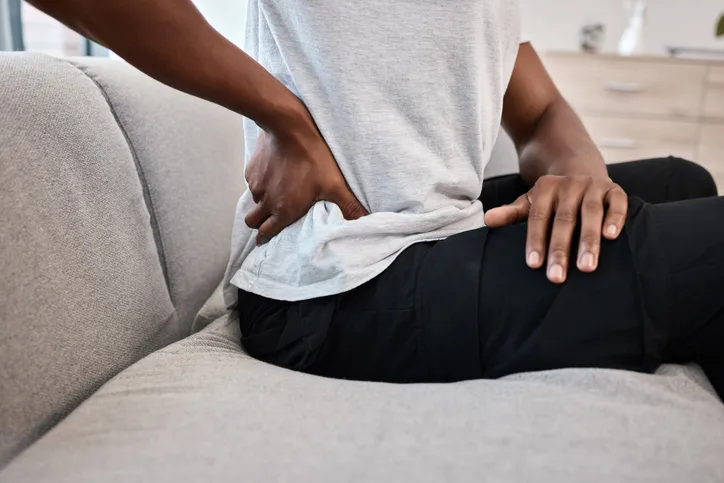
You lower yourself into the car and your hip catches halfway down. Crossing your legs at your desk sends a sharp pinch through the groin, and by evening the ache has spread to the outside of your thigh. Metro Pain Centers identifies the hip structure causing your pain and treats it so you can sit, stand, and cross your legs without bracing for the catch.
Understanding Hip Pain at Metro Pain Centers
Hip pain is a musculoskeletal condition originating from the hip joint, a ball-and-socket articulation where the femoral head sits within the acetabulum of the pelvis, along with the surrounding labrum, articular cartilage, joint capsule, bursae, tendons, and muscles that stabilize the joint and enable weight-bearing movement.
Femoroacetabular impingement, the abnormal contact between the femoral head and the rim of the acetabulum caused by bony overgrowth on one or both surfaces during repetitive hip flexion, is a structural cause of hip pain that Metro Pain Centers evaluates in patients who report groin pain with sitting, squatting, or crossing legs. Identifying impingement early prevents the progressive labral and cartilage damage it produces when left untreated.
The hip joint bears forces of up to five times body weight during running and three times body weight during normal walking. This mechanical demand makes the hip vulnerable to cartilage wear, labral injury, tendon degeneration, and bursal inflammation.
Metro Pain Centers treats hip pain caused by osteoarthritis, labral tears, bursitis, tendinopathy, femoroacetabular impingement, and sacroiliac joint dysfunction. Our physicians isolate the specific structure responsible because the treatment differs for each one.
Understanding Your Condition
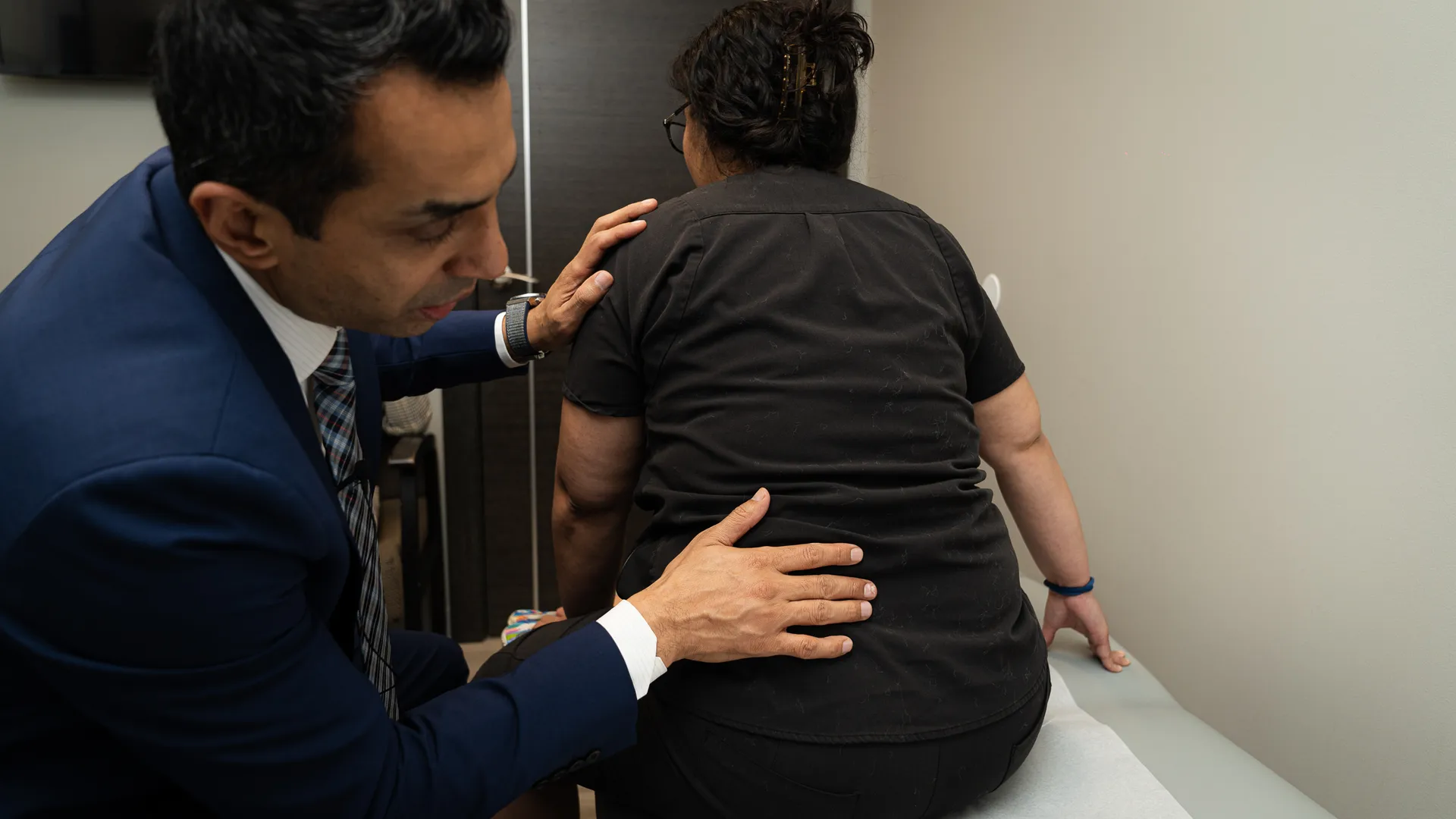
Our board-certified physicians use advanced diagnostic techniques to accurately identify the source of your pain, ensuring you receive the most effective treatment.
Symptoms of Hip Pain
Groin pain that worsens when you bring the knee toward the chest or cross the affected leg over the opposite knee suggests intra-articular hip pathology. Metro Pain Centers evaluates groin-localized pain to determine whether the joint surface, labrum, or capsule is involved.
Pain along the outer hip and upper thigh that intensifies with side-lying or walking points to trochanteric bursitis or gluteal tendinopathy. Our pain management physicians distinguish lateral hip pain from joint pain because the treatment approaches differ.
A catching or locking sensation during hip movement indicates a labral tear or loose body within the joint space. Metro Pain Centers uses provocative examination maneuvers to reproduce the catch and localize the mechanical source.
Stiffness that restricts the ability to put on shoes or socks signals progressive loss of hip internal rotation. Our specialists measure rotational range to determine whether the restriction comes from cartilage loss, capsular tightness, or bony impingement.
What Causes Hip Pain
Hip osteoarthritis is the most common cause of chronic hip pain that Metro Pain Centers diagnoses. The articular cartilage covering the femoral head and acetabulum wears down over decades, producing groin pain that worsens with walking and weight-bearing.
Femoroacetabular impingement creates abnormal bone-on-bone contact during hip flexion. The cam type involves a bump on the femoral head. The pincer type involves acetabular rim overgrowth. Metro Pain Centers identifies the impingement type because each responds to different treatment strategies.
Trochanteric bursitis and gluteal tendinopathy affect the lateral hip where the gluteal tendons attach to the greater trochanter. Repetitive friction between the iliotibial band and the trochanteric bursa produces the outer hip pain that worsens with stair climbing and side-lying.
Referred pain from the lumbar spine or sacroiliac joint mimics hip joint pain and is a common diagnostic trap. Metro Pain Centers uses diagnostic hip joint injections to confirm whether the hip itself is the pain generator or whether the pain originates from a spinal source.
How Metro Pain Centers Diagnoses Hip Pain
Physical examination includes hip range of motion testing, FADIR and FABER provocative maneuvers, palpation of the greater trochanter, and gait analysis. Our board-certified pain specialists use these tests to separate intra-articular hip pathology from periarticular and referred sources.
X-rays reveal joint space narrowing, osteophyte formation, and bony morphology that identifies cam or pincer impingement. Metro Pain Centers orders AP pelvis and frog-leg lateral views to evaluate the hip joint from multiple angles.
MRI with or without arthrography visualizes labral tears, cartilage defects, and soft tissue pathology that X-rays cannot detect. Our physicians order hip MRI when examination findings suggest labral involvement or when imaging is needed to plan procedural treatment.
Diagnostic hip joint injections under fluoroscopic guidance confirm whether the hip joint is the pain generator. When the injection eliminates groin pain temporarily, Metro Pain Centers uses that confirmation to direct treatment at the verified source.
Treatment Options for Hip Pain at Metro Pain Centers
Intra-articular hip injections with corticosteroid or hyaluronic acid reduce inflammation and restore lubrication within the hip joint. Metro Pain Centers performs these under fluoroscopic guidance to ensure the medication enters the deep-seated hip joint capsule.
Trochanteric bursa injections target the lateral hip pain from bursitis and gluteal tendinopathy. Our physicians use ultrasound guidance to deliver corticosteroid directly into the inflamed bursa overlying the greater trochanter.
Interventional pain management at Metro Pain Centers includes radiofrequency ablation of the hip sensory nerves for patients with hip arthritis pain that returns after injection therapy, providing months of sustained relief.
Physical therapy strengthens the hip abductors and external rotators to reduce mechanical overload on damaged joint structures. PRP therapy supports labral and cartilage healing for patients seeking regenerative alternatives to repeated injections.
Schedule an appointment to discuss your hip pain treatment plan.
Your Hip Pain Specialists at Metro Pain Centers

EXPERIENCE
Led by Dr. Rahul Sood
Led by Dr. Rahul Sood, Chairman of Anesthesiology at New Bridge Medical Centers, Metro Pain Centers delivers multilingual care in English, Spanish, Punjabi, and Hindi across all 12 offices.
Our physicians hold board certifications in anesthesiology and pain medicine, with training from Mount Sinai, Rutgers, and Thomas Jefferson University.
Related Conditions Treated by Metro Pain Centers
Hip pain frequently coexists with other conditions our physicians treat. Hip arthritis is the most common cause of progressive hip joint pain and the condition our specialists diagnose most often in this region.
Hip bursitis produces lateral hip pain that often accompanies or mimics joint-origin hip pain. Hip labral tears create mechanical symptoms alongside groin pain. Sciatica refers pain from the lumbar spine into the hip and leg.
View all conditions we treat at Metro Pain Centers.
Hip Pain Treatment at 12 NJ and NY Locations
How do I know if my hip pain is from the joint or the muscles around it?
Hip joint pain typically localizes to the groin and worsens with weight-bearing. Muscle and bursa pain affects the outer hip and buttock. Metro Pain Centers uses physical examination and diagnostic injections to distinguish the source.
Can hip pain be treated without surgery?
Most hip pain responds to non-surgical treatment. Metro Pain Centers uses image-guided injections, radiofrequency ablation, physical therapy, and regenerative medicine to manage hip pain without joint replacement.
Does hip pain always mean I need a hip replacement?
Hip replacement is reserved for advanced joint destruction that no longer responds to conservative treatment. Metro Pain Centers provides the interventional options that help many patients avoid or delay surgery.
Why does my hip hurt when I cross my legs?
Crossing legs combines hip flexion, adduction, and internal rotation, compressing the labrum and joint capsule. Metro Pain Centers evaluates whether the pain originates from a labral tear, impingement, or cartilage damage.
Does insurance cover hip pain treatment at Metro Pain Centers?
Metro Pain Centers accepts most major insurance plans. Our billing team verifies your coverage and explains costs before any procedures.
Hear From Our Patients
The doctors actually listen to you and take time to explain everything. I finally found relief after years of back pain.
From my first visit, I felt like they genuinely cared about helping me get better. The staff is wonderful and the treatments changed my life.
After seeing multiple doctors with no improvement, Metro Pain Centers finally gave me a treatment plan that works. I can't recommend them enough.
Get Relief from Hip Pain Today
The catching when you lower into a chair and the ache that follows you from your desk to your bed do not have to control how you move through your day. Metro Pain Centers delivers the diagnostic precision to find the damaged structure and the interventional skill to treat it.