Knee Pain Treatment in NJ & NY
You grip the railing going down the stairs because your knee buckles on the second step. Standing up from the couch requires both hands on the armrest, and by evening the ache has settled so deep behind your kneecap that straightening your leg feels like a negotiation. Metro Pain Centers identifies the knee structure causing your pain and treats it so you can descend stairs without bracing for the buckle.
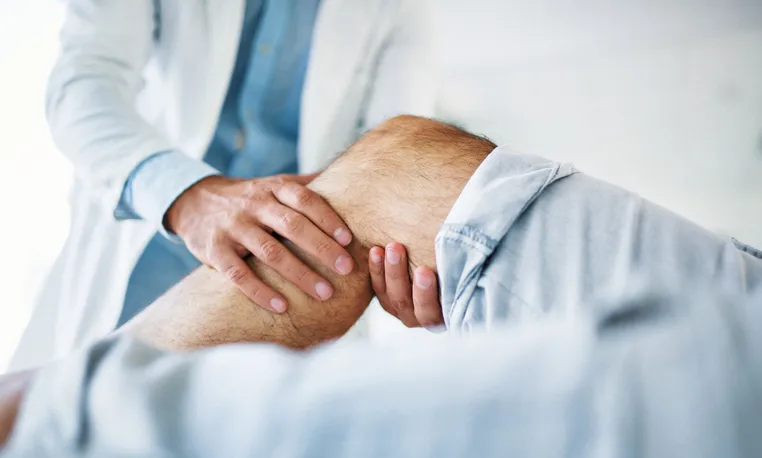
Understanding Knee Pain at Metro Pain Centers
Knee pain is a musculoskeletal condition originating from the knee joint, a modified hinge articulation where the femoral condyles meet the tibial plateau, stabilized by the anterior cruciate, posterior cruciate, medial collateral, and lateral collateral ligaments, cushioned by the medial and lateral menisci, and tracked by the patellofemoral joint.
Genicular nerve block, the targeted injection of local anesthetic around the superior lateral, superior medial, and inferior medial genicular nerves that transmit pain signals from the knee joint capsule to the brain, is a diagnostic and therapeutic procedure Metro Pain Centers uses to confirm the knee joint as the pain source and provide immediate relief while planning long-term treatment.
The knee absorbs forces of up to six times body weight during stair descent and four times body weight during squatting. This mechanical demand makes the knee vulnerable to cartilage wear, meniscal injury, ligament strain, and periarticular inflammation.
Metro Pain Centers treats knee pain caused by osteoarthritis, meniscal tears, bursitis, patellofemoral syndrome, ligament injuries, and tendinopathy. Our physicians isolate the specific structure responsible because the treatment differs for each one.
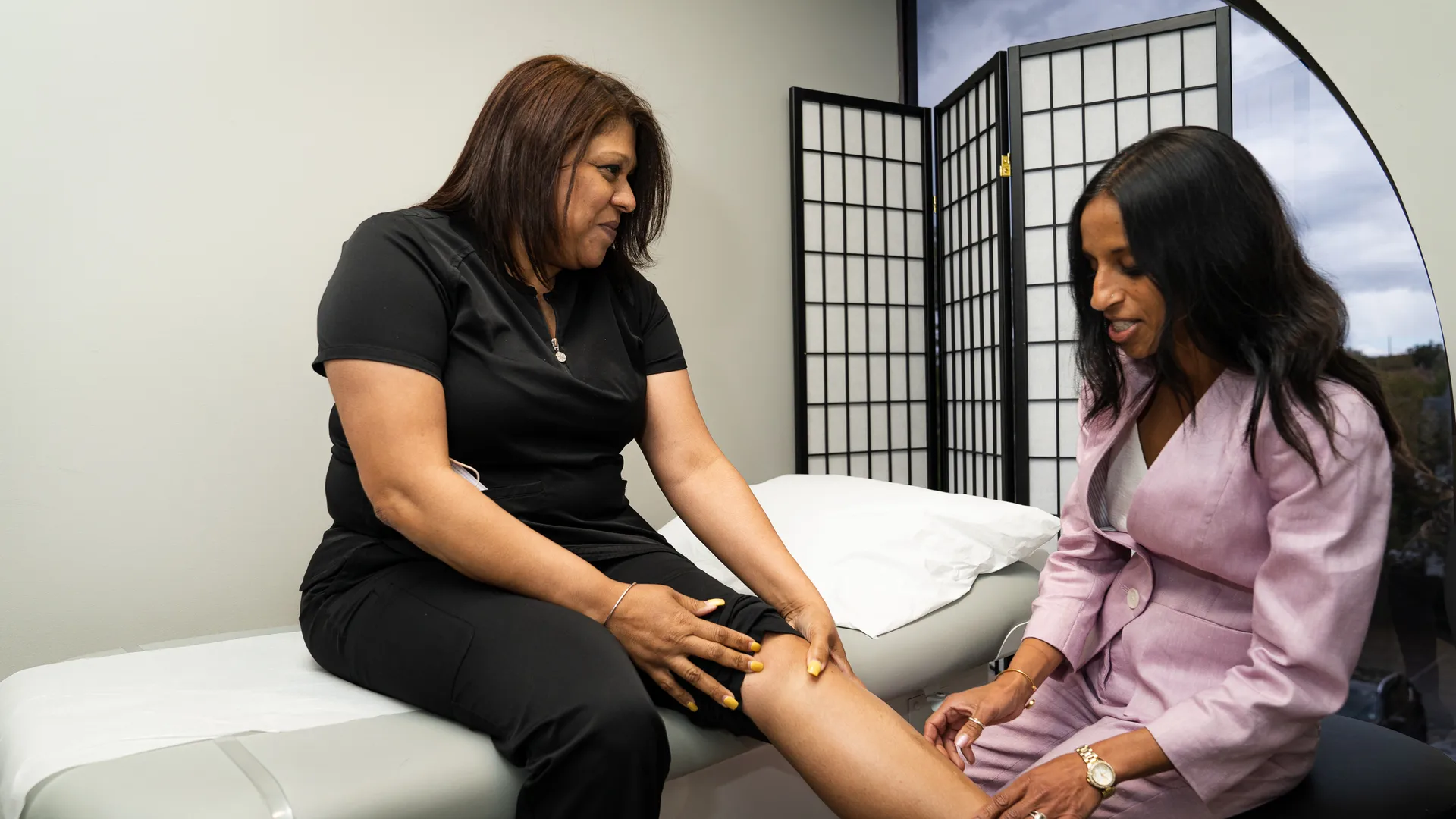
Understanding Your Condition
Our board-certified physicians use advanced diagnostic techniques to accurately identify the source of your pain, ensuring you receive the most effective treatment.
Symptoms of Knee Pain
Buckling or giving way during stairs or uneven ground suggests ligament instability or quadriceps weakness affecting the knee's ability to support load. Metro Pain Centers evaluates the buckling pattern to determine whether the instability originates from a ligament, meniscus, or neuromuscular source.
Swelling that develops within hours of activity and settles overnight indicates an intra-articular effusion from cartilage damage or meniscal irritation. Our pain management physicians assess the timing and volume of swelling to narrow the diagnosis.
A catching or locking sensation that prevents full straightening of the knee points to a meniscal tear or loose body within the joint space. Metro Pain Centers uses provocative knee examination maneuvers to reproduce the mechanical catch and localize its origin.
Stiffness after prolonged sitting that eases within the first several steps is characteristic of patellofemoral cartilage irritation. Our specialists distinguish this start-up stiffness from the persistent stiffness of advanced arthritis because each requires a different treatment path.
What Causes Knee Pain
Knee osteoarthritis is the most common cause of chronic knee pain that Metro Pain Centers diagnoses. The articular cartilage lining the femoral condyles and tibial plateau degrades over decades, producing pain with weight-bearing and progressive loss of joint space.
Meniscal tears create mechanical symptoms when the torn fragment displaces into the joint. Acute tears occur during twisting injuries. Degenerative tears develop gradually in cartilage that has weakened with age. Metro Pain Centers identifies the tear type because treatment varies between acute and degenerative presentations.
Patellofemoral syndrome produces anterior knee pain from abnormal tracking of the patella within the trochlear groove. The cartilage on the undersurface of the kneecap becomes irritated when the patella shifts laterally during flexion. Our physicians assess patellar tracking to determine whether alignment correction can resolve the pain.
Referred pain from the hip joint or lumbar spine mimics knee pain and is a diagnostic trap Metro Pain Centers evaluates for routinely. A hip joint injection that eliminates knee-area pain confirms the hip rather than the knee as the true pain generator.
How Metro Pain Centers Diagnoses Knee Pain
Physical examination includes range of motion testing, ligament stress tests, McMurray's meniscal maneuver, patellar tracking assessment, and joint line palpation. Our board-certified pain specialists use these tests to separate intra-articular knee pathology from periarticular and referred sources.
Weight-bearing X-rays reveal joint space narrowing, osteophyte formation, and alignment abnormalities including varus or valgus deformity. Metro Pain Centers orders standing AP, lateral, and sunrise patellar views to evaluate the knee from multiple angles.
MRI visualizes meniscal tears, ligament injuries, cartilage defects, and bone marrow edema that X-rays cannot detect. Our physicians order knee MRI when examination findings suggest internal derangement or when imaging is needed to plan procedural treatment.
Diagnostic genicular nerve blocks under fluoroscopic guidance confirm whether the knee joint capsule is the pain generator. When the block eliminates knee pain temporarily, Metro Pain Centers uses that confirmation to plan genicular nerve ablation for sustained relief.
Treatment Options for Knee Pain at Metro Pain Centers
Intra-articular knee injections with corticosteroid or hyaluronic acid reduce inflammation and restore lubrication within the knee joint. Metro Pain Centers performs these under ultrasound or fluoroscopic guidance to ensure precise intra-articular delivery.
Genicular nerve radiofrequency ablation interrupts pain signaling from the knee joint capsule for patients whose pain returns after injection therapy. Our physicians ablate the superior medial, superior lateral, and inferior medial genicular nerves to provide six to twelve months of relief.
Interventional pain management at Metro Pain Centers includes viscosupplementation for patients with moderate knee arthritis who need longer-lasting relief between corticosteroid cycles.
Physical therapy strengthens the quadriceps, hamstrings, and hip abductors to reduce mechanical overload on the knee joint surfaces. PRP therapy delivers concentrated growth factors into the knee to support cartilage preservation and meniscal healing.
Schedule an appointment to discuss your knee pain treatment plan.
Your Knee Pain Specialists at Metro Pain Centers

EXPERIENCE
Led by Dr. Rahul Sood
Led by Dr. Rahul Sood, Chairman of Anesthesiology at New Bridge Medical Centers, Metro Pain Centers delivers multilingual care in English, Spanish, Punjabi, and Hindi across all 12 offices.
Our physicians hold board certifications in anesthesiology and pain medicine, with training from Mount Sinai, Rutgers, and Thomas Jefferson University.
Related Conditions Treated by Metro Pain Centers
Knee pain frequently coexists with other conditions our physicians treat. Knee arthritis is the most common cause of progressive knee joint pain and the condition our specialists diagnose most often in this region.
Knee bursitis produces localized swelling and pain around the kneecap that often accompanies joint pathology. Meniscus tear creates mechanical symptoms alongside weight-bearing pain. Runner's knee affects patients with anterior knee pain from patellofemoral tracking dysfunction.
View all conditions we treat at Metro Pain Centers.
Knee Pain Treatment at 12 NJ and NY Locations
Why does my knee buckle going down stairs?
Stair descent places up to six times body weight on the knee and demands eccentric quadriceps control. Cartilage damage, meniscal tears, or quadriceps weakness can cause the knee to give way. Metro Pain Centers identifies the specific cause through examination and imaging.
Can knee pain be treated without surgery?
Most knee pain responds to non-surgical treatment. Metro Pain Centers uses image-guided injections, genicular nerve ablation, physical therapy, and regenerative medicine to manage knee pain without joint replacement.
What is a genicular nerve block?
A genicular nerve block is a diagnostic injection around the nerves that carry pain signals from the knee joint capsule. Metro Pain Centers uses this procedure to confirm the knee as the pain source and to predict response to radiofrequency ablation.
Why does my knee hurt when I sit for long periods?
Prolonged sitting compresses the patella against the trochlear groove. The patellofemoral cartilage becomes irritated under sustained pressure. Metro Pain Centers evaluates patellar tracking and cartilage integrity to determine the cause.
Does insurance cover knee pain treatment at Metro Pain Centers?
Metro Pain Centers accepts most major insurance plans. Our billing team verifies your coverage and explains costs before any procedures.
Hear From Our Patients
The doctors actually listen to you and take time to explain everything. I finally found relief after years of back pain.
From my first visit, I felt like they genuinely cared about helping me get better. The staff is wonderful and the treatments changed my life.
After seeing multiple doctors with no improvement, Metro Pain Centers finally gave me a treatment plan that works. I can't recommend them enough.
Get Relief from Knee Pain Today
The buckling on the stairs and the ache that follows you from the couch to the bed do not have to control how you move through your day. Metro Pain Centers delivers the diagnostic precision to find the damaged structure and the interventional skill to treat it.