Shoulder Tears Treatment in NJ & NY
Your arm gives out carrying a bag of groceries from the car, and the sudden drop sends the bag to the ground before you can catch it. Lifting a gallon of milk to the counter requires a second hand underneath, and the deep ache that lingers afterward tells you the shoulder has lost something it cannot get back on its own. Metro Pain Centers identifies the torn shoulder structure and treats it so you can carry, lift, and reach without your arm giving out.

Understanding Shoulder Tears at Metro Pain Centers
Shoulder tears encompass disruptions of the soft tissue structures that stabilize and move the shoulder, including partial and full-thickness rotator cuff tears, superior labrum anterior-posterior lesions, anterior and posterior labral tears, and biceps tendon tears, each of which compromises the joint's ability to maintain stability and produce controlled movement.
Superior labrum anterior-posterior lesion, a tear of the labrum at the top of the glenoid socket where the long head of the biceps tendon attaches to the superior glenoid rim that detaches the labral anchor and destabilizes the biceps-labral complex, is a shoulder tear Metro Pain Centers evaluates in patients who report deep shoulder pain with overhead activity, clicking, and a sensation of the arm catching or slipping during loaded movement.
The labrum deepens the glenoid socket by approximately 50 percent and provides the attachment point for the glenohumeral ligaments. Tearing the labrum removes both the mechanical depth and the ligamentous anchor that keep the humeral head centered.
Metro Pain Centers treats rotator cuff tears, SLAP lesions, Bankart lesions, posterior labral tears, and biceps tendon ruptures. Our physicians classify the tear type and severity because partial tears, full tears, and labral detachments each respond to different interventional strategies.
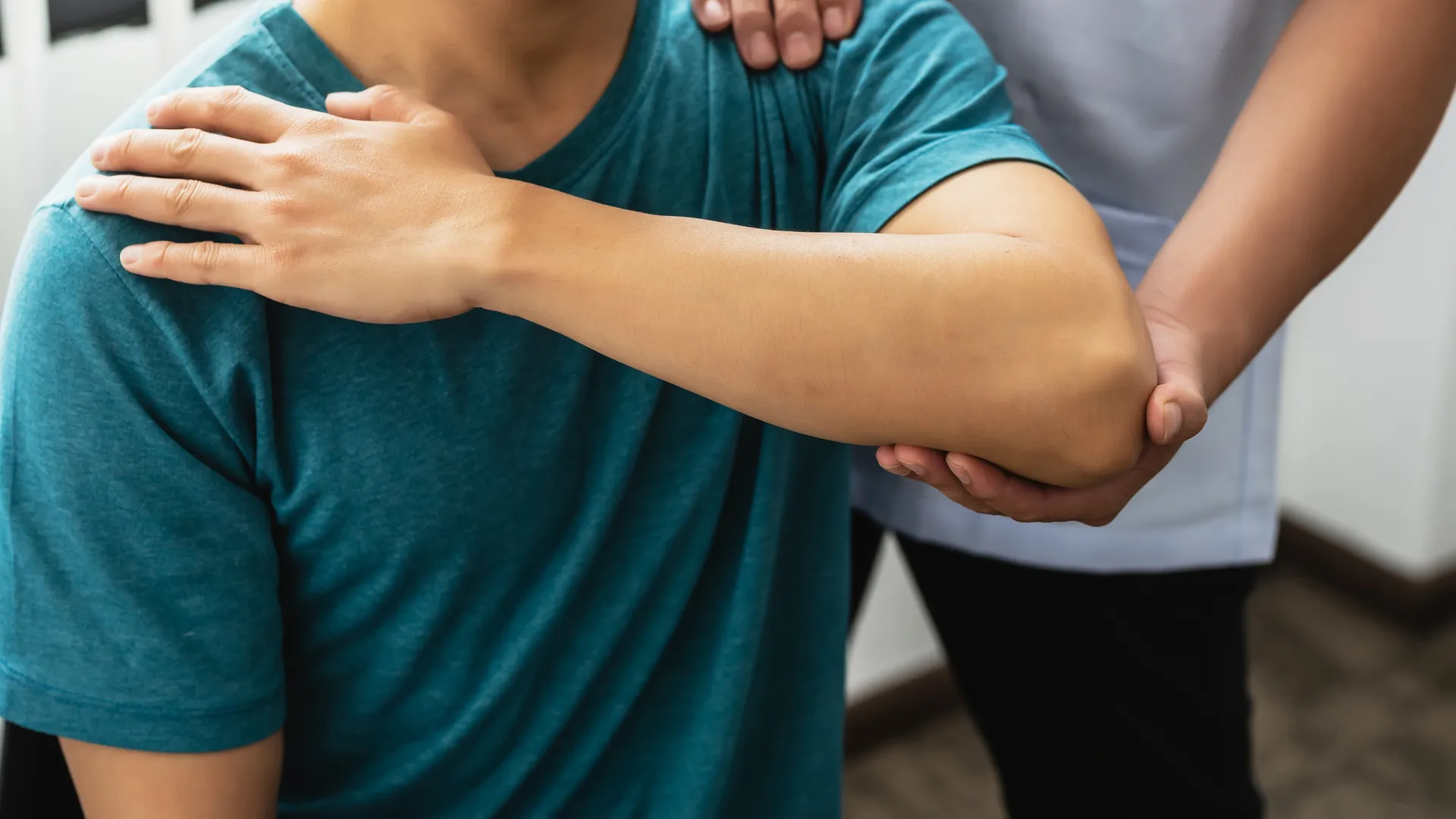
Understanding Your Condition
Our board-certified physicians use advanced diagnostic techniques to accurately identify the source of your pain, ensuring you receive the most effective treatment.
Symptoms of Shoulder Tears
Weakness when carrying objects at your side or lifting them away from the body is the most functional symptom of a rotator cuff tear. The arm gives out under loads it previously handled. Metro Pain Centers tests rotator cuff strength in isolation to determine which tendon is torn.
A popping or catching sensation during overhead movement suggests a labral tear. The torn labral tissue shifts within the joint during motion. Our pain management physicians use specific labral provocation tests to reproduce the mechanical catch.
Deep shoulder pain that worsens at night and radiates down the upper arm indicates an inflammatory response around the torn tissue. Metro Pain Centers evaluates night pain severity because it often correlates with the extent of tendon or labral disruption.
A palpable lump in the front of the upper arm following sudden pain suggests a biceps tendon rupture, known as a Popeye deformity. Our specialists assess biceps tendon integrity alongside rotator cuff evaluation because the two structures are anatomically connected at the labrum.
What Causes Shoulder Tears
Chronic rotator cuff tendon degeneration from repetitive overhead use and aging produces partial tears that progress to full-thickness tears over time. The supraspinatus tendon is the most commonly torn rotator cuff tendon because it passes through the narrow subacromial space. Metro Pain Centers evaluates tendon quality to determine whether a tear is degenerative or traumatic.
Acute trauma from a fall onto an outstretched hand or a sudden pulling force can tear the rotator cuff or labrum in a single event. The traumatic mechanism overwhelms the tissue's tensile strength. Our physicians assess the injury mechanism to classify the tear and predict healing potential.
Shoulder instability from repeated dislocations or subluxations tears the labrum at the anterior glenoid rim, creating a Bankart lesion. Each dislocation episode damages the labrum further. Metro Pain Centers evaluates instability history because recurrent labral tearing requires a different management approach.
Overhead sports and manual labor place sustained demand on the biceps-labral complex. Baseball throwing, tennis serving, and overhead lifting stress the superior labrum at the biceps anchor. Our physicians identify sport-specific and occupation-specific tear patterns to guide treatment.
How Metro Pain Centers Diagnoses Shoulder Tears
Physical examination includes rotator cuff isolation tests for each tendon, O'Brien's test and the crank test for labral tears, Speed's test for biceps pathology, and apprehension testing for instability. Our board-certified pain specialists use these maneuvers to identify the torn structure before ordering imaging.
Ultrasound provides dynamic real-time visualization of the rotator cuff tendons and biceps tendon. Metro Pain Centers uses office-based ultrasound to detect partial and full-thickness rotator cuff tears and biceps subluxation during the initial evaluation.
MRI with or without arthrography is the gold standard for labral tear diagnosis. Arthrographic contrast outlines labral detachments and partial-thickness undersurface rotator cuff tears that standard MRI may underestimate. Our physicians order MR arthrography when labral pathology is suspected.
Diagnostic glenohumeral joint injection with local anesthetic confirms the shoulder joint as the pain source. When the injection eliminates deep shoulder pain temporarily, Metro Pain Centers uses that information to plan treatment targeting the verified tear.
Treatment Options for Shoulder Tears at Metro Pain Centers
Ultrasound-guided subacromial and glenohumeral injections reduce inflammation around torn rotator cuff and labral tissue. Metro Pain Centers uses image guidance to deliver corticosteroid precisely to the inflamed interface between the torn structure and the surrounding tissue.
Suprascapular nerve blocks provide sustained pain relief for patients with rotator cuff tears who are not surgical candidates. Our physicians target the suprascapular nerve at the spinoglenoid notch to interrupt the primary pain pathway from the posterior shoulder.
Interventional pain management at Metro Pain Centers includes advanced injection techniques and nerve block protocols for patients managing shoulder tears non-operatively.
Physical therapy strengthens the intact rotator cuff muscles to compensate for the torn tendon and restores scapular mechanics. PRP therapy delivers concentrated growth factors to the tear site to support tissue healing in partial-thickness tears and early labral lesions.
Schedule an appointment to discuss your shoulder tear treatment plan.
Your Shoulder Tear Specialists at Metro Pain Centers

EXPERIENCE
Led by Dr. Rahul Sood
Led by Dr. Rahul Sood, Chairman of Anesthesiology at New Bridge Medical Centers, Metro Pain Centers delivers multilingual care in English, Spanish, Punjabi, and Hindi across all 12 offices.
Our physicians hold board certifications in anesthesiology and pain medicine, with training from Mount Sinai, Rutgers, and Thomas Jefferson University.
Related Conditions Treated by Metro Pain Centers
Shoulder tears frequently coexist with other conditions our physicians treat. Shoulder pain is the presenting symptom, and confirming a tear as the specific cause determines whether conservative or procedural treatment is appropriate.
Rotator cuff injury is the most common type of shoulder tear our specialists diagnose. Shoulder impingement often precedes rotator cuff tears by compressing the tendon. Shoulder bursitis accompanies tears when the inflamed bursa reacts to the damaged tendon beneath it.
View all conditions we treat at Metro Pain Centers.
Shoulder Tear Treatment at 12 NJ and NY Locations
Can a shoulder tear heal without surgery?
Many partial-thickness rotator cuff tears and stable labral lesions respond to non-surgical treatment. Metro Pain Centers uses injections, nerve blocks, physical therapy, and regenerative medicine to manage shoulder tears without surgical repair.
Why does my arm give out when I carry things?
A torn rotator cuff tendon cannot generate the force needed to stabilize the arm during loaded activities. The arm gives way when the remaining intact muscles cannot compensate. Metro Pain Centers identifies which tendon is torn to plan targeted treatment.
What is a SLAP tear?
A SLAP tear is a superior labrum anterior-posterior lesion where the labrum detaches from the top of the glenoid socket at the biceps tendon anchor. Metro Pain Centers diagnoses SLAP tears through examination and MR arthrography.
How do I know if my shoulder tear is getting worse?
Increasing weakness, worsening night pain, and loss of overhead function suggest tear progression. Metro Pain Centers monitors tear size with serial ultrasound to track changes over time.
Does insurance cover shoulder tear treatment at Metro Pain Centers?
Metro Pain Centers accepts most major insurance plans. Our billing team verifies your coverage and explains costs before any procedures.
Hear From Our Patients
The doctors actually listen to you and take time to explain everything. I finally found relief after years of back pain.
From my first visit, I felt like they genuinely cared about helping me get better. The staff is wonderful and the treatments changed my life.
After seeing multiple doctors with no improvement, Metro Pain Centers finally gave me a treatment plan that works. I can't recommend them enough.
Get Relief from Your Shoulder Tear Today
The arm that gives out carrying groceries and the deep ache that follows every overhead reach do not have to dictate what you can lift and carry. Metro Pain Centers delivers the diagnostic precision to classify the tear and the interventional skill to treat it.